
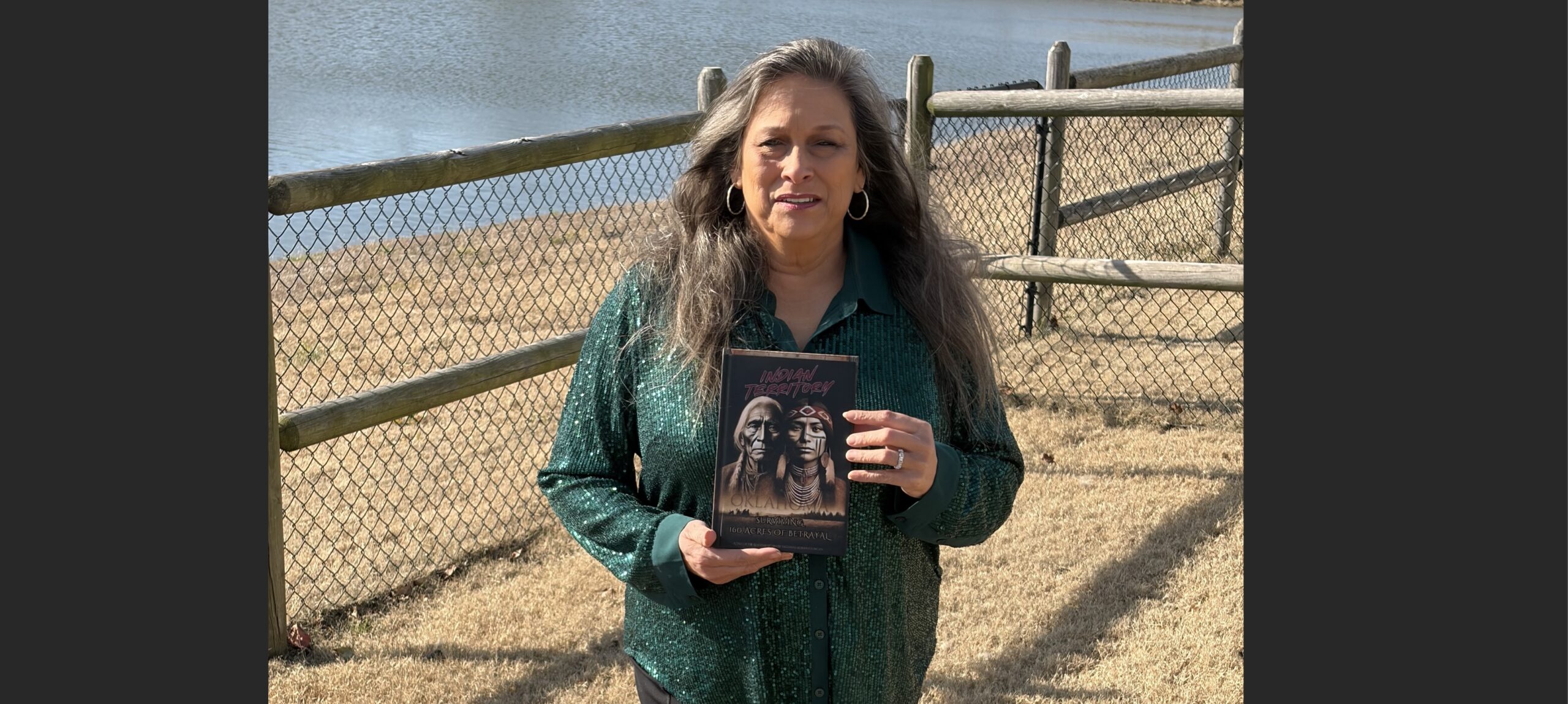
CORRECTION: This post has been updated from its initial date of publication to clarify Duncan’s tribal citizenship. Duncan is a citizen of the Cherokee Nation with Mvskoke heritage.
MVSKOKE RESERVATION – Tatianna K. Duncan (Cherokee/Mvskoke) released “Indian Territory: Surviving 160 Acres of Betrayal,” on Dec. 13. The book illuminates the dark origins of the City of Tulsa, how it was built on stolen land from Indigenous allottees, through the telling of her own family’s story. The book was originally a research project about her family that evolved into a massive investigation culminating in the book.
Described online as “both an intimate family history and an unflinching indictment of the laws and institutions that turned survival itself into a legal battleground,” the plot revolves around two Mvskoke girls forced into guardianships and stripped of their land.
According to Duncan, the story is based on real events, but once she started her research it quickly became apparent that there was more to her family’s story than she had been told.
“It started off with oral history, and then it was confirmed through probate records, guardian files, documents, BIA correspondence, etc… It’s from an Indian perspective. I feel like it is a very similar story to many Indian families across Indian Country. … Once I got into it, it was a lot more than what we were told.” Duncan said.
Duncan’s work uncovering the disturbing history of Oklahoma’s Allotment Era also culminated in the Lucinda Hickory Research Institute, started in 2020, and named after her ancestor. Hickory died under mysterious circumstances at the age of just 13 after reports came out that her land held millions of dollars in natural resources. According to Duncan, given the string of mysterious deaths that happened to Indigenous people who suddenly became wealthy during the Allotment Era, her cause of death is suspicious.
Duncan, by her own admission, isn’t writing from a solely scholarly point of view. She’s telling the story of what her family and what many other Indigenous families went through during the Allotment Era.
“I feel like my technique is raw, and I am a bit abrasive. I’m not writing from an academic perspective, but I do have a lot of documentation in my book to back up what I’m saying,” Duncan said.
“I wanted this story told, and I wanted it told with respect, not exploited by someone else.”
To read an excerpt from Duncan’s book, visit They Were Not Silent- They Were Silenced.
Tatianna Duncan’s can be found on Amazon: https://www.amazon.com/gp/product/B0G3K94LLY




THIS DOES NOT HAVE FULL TRUTHS.
THIS WOMAN IS NOT TELLING / WRITING THE FULL TRUTHS.
THERRS MORE TO THE STORY OF HER ANCESTRY THAN EVEN SHE KNOWS.
THERE ARE DOCUMENTS ON EACH ORIGINAL ENROLLEE.
THESE WERE DESCENDANTS FROM A NON-DISCHARGED MILITARY OFFICER / ANCESTOR PATRIARCH WAS A WHITEMAN / BRITISH MILITARY OFFICER, BORN IN THIS COUNTRY & SERVED AS A YOUNG AGE MILITARY OFFICER IN THE AMERICAN REVOLUTIONARY WAR 1770s a.d.
I KNOW HISTORY QUITE WELL & I COULD GIVE HER MUCH MORE OF THE STORY THAN SHE HAS DOCUMENTED.