
This story is our third in a series by the Mvskoke News team focusing on climate solutions on the Mvskoke Reservation. This year, Mvskoke Media has been part of the Climate Beacon Newsroom Initiative, a collaboration between the Indigenous Journalists Association and the Solutions Journalism Network. Solutions journalism rigorously examines evidence-based individual, group, and community responses to social problems. The initiative supported our newsroom’s skills development in story production, specifically stories focused on responses to climate and environmental challenges.
BIXBY – On a quiet, serene, family allotment outside of Bixby on the Mvskoke Reservation sits the Euchee Butterfly Farm, a haven for many unique airborne pollinator species. The farm annually hosts the Tribal Alliance for Pollinators Conference, a two-day event featuring speakers on habitat restoration and conservation advocacy. The farm is owned by Director Jane Breckinridge (Euchee/Mvskoke), a pollinator conservationist who monitors the challenges these populations face in the wild.
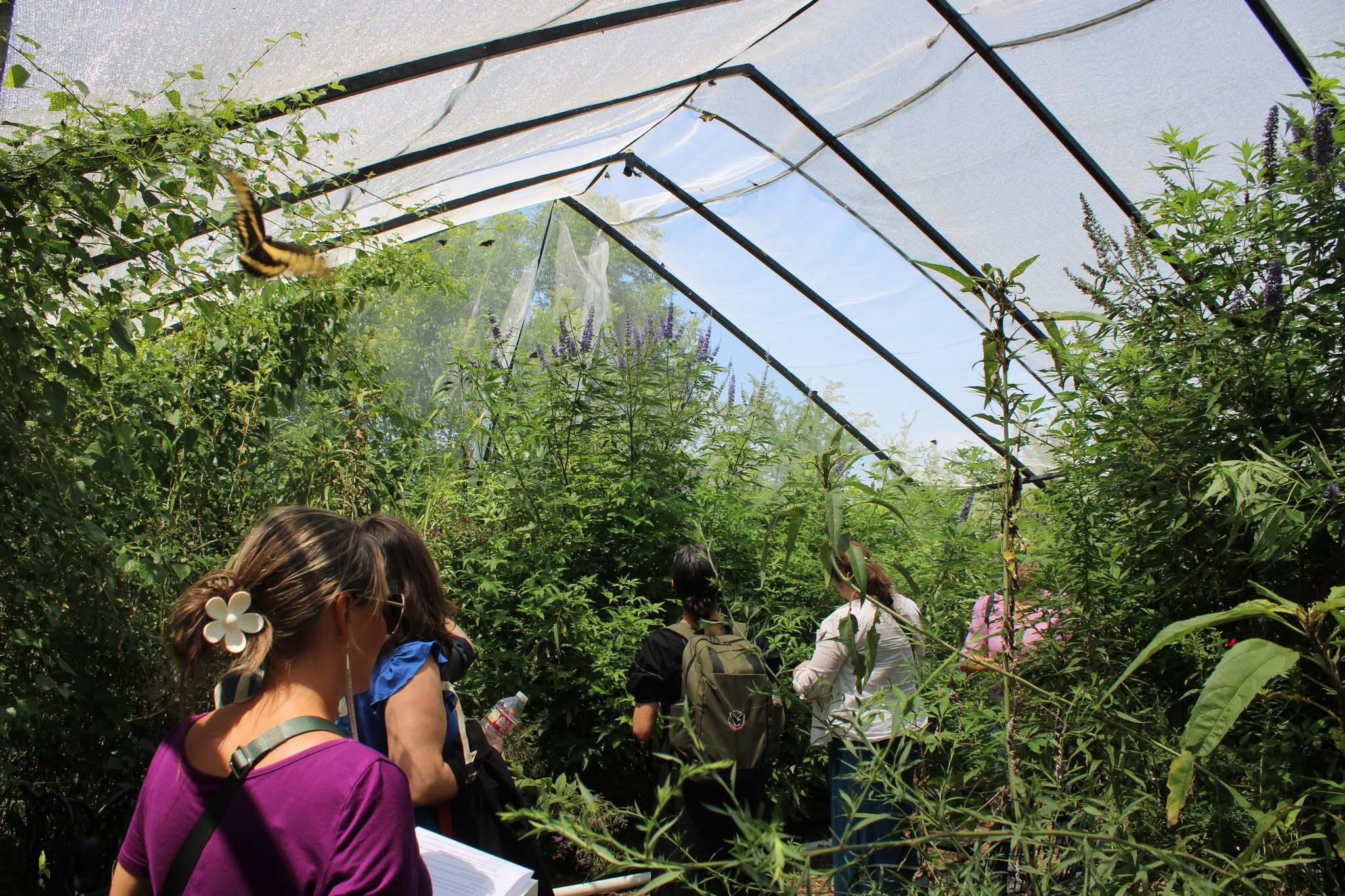
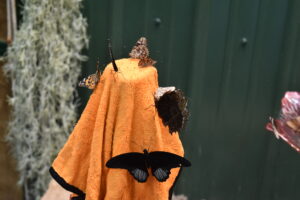
Step inside the farm’s indoor aviary and you will find it to be the residence of many different airborne pollinator species, including Blue Morphos, Caligo, and Paper Kites. Their home is outfitted with everything the pollinators need to thrive: a running water pipe system, climate-controlled temperatures, and plenty of rotting fruit to consume.
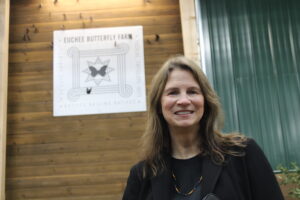
Outside the aviary, the farm encompasses 14 acres of true original native prairie remnant- it’s never been plowed. According to Breckenridge, there are over 400 plant species and many animal species. The farm also has documentation on several species not found anywhere else in Oklahoma.
Pollinators living outside the farm are not so lucky.
So far in the 21st Century, pollinators have undergone significant change. Shrinking habitats, invasive plant species, and pesticides have all contributed to significant population decline. The National Library of Medicine reports that over one-fifth of native North American pollinators are at elevated risk of extinction.
The goal of the Tribal Alliance for Pollinators Conference is to inspire and uplift participants while informing them on the steps they can take to protect pollinator populations. Breckinridge’s solution is education about actions like growing milkweed, delayed mowing, and avoiding pesticides.
“What we do at these conferences and with the lineup of speakers that we have is not only give people a context of why it is important to do this for our lands, and for ourselves, but it also gives practical advice on ‘how do we do this?’” Breckinridge said.
“We try to do a balance of that, to lift people up who feel discouraged about it, give a cultural context, and give practical advice on how to restore the lands, how do we help the butterflies, how do we help these pollinators in decline.”
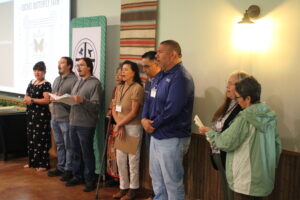
This marks the 11th year for the conference. A total of 150 were registered to attend, with 20 different Tribes represented. Breckinridge said registrants came from as far away as Arizona, California, Nebraska, and New Mexico, illustrating that pollinator population decline is not an issue exclusive to the Mvskoke Reservation or the state of Oklahoma.
This year’s conference featured a lineup including monarch butterfly expert, Dr. Orley “Chip” Taylor; wild bee expert, Dr. James Hung; and MCN Office of Environmental Services Director James Williams. While speakers presented research on the current state of the environment, they also included ways to preserve and restore it.
Although conferences can attract large audiences and serve as a conduit for invaluable information, Breckinridge warned that the environment is every community member’s responsibility, not just select individuals. Education must be disseminated among the entire population, not merely a portion.
“This is something we’re all invested in, not just citizens of the Mvskoke Nation Reservation, not just as Indigenous people, but as humans on this planet,” Breckinridge said. “It’s time that we step in. Our non-human relatives are starving to death because we’ve lost so much habitat. If we all want to keep this big, beautiful planet the way we like it, we must do something about it.”
Breckinridge has personally noticed changes in the environment, such as fewer fireflies during warmer seasons.
What they would expect to see is some ups and downs in the amount of pollinators, but what they’re seeing is that the amount is practically in freefall.
“You normally see sort of variations in pollinator populations, and that’s to be expected, but this decline has been pretty consistent over probably the last 5 to 10 years, significantly, and the populations are not recovering,” Breckinridge says.
Breckinridge also notes that the weather in Oklahoma has changed drastically, affecting populations.
“It’s warmer at a lot of the times than it should be, which is, it changes the quality of the nectar, and it also changes the metabolic needs of the insects and the pollinators themselves. So you’ve got a lot of variables going on there,” she adds.
“You’ve got increased use of pesticides, and then also the continued use of a lot of herbicides. We’ve got a lot of different factors coming in at the same time that are really, really stressing these populations.”
Although the populations are dwindling, Breckinridge believes it is not too late to step in and help these struggling species.
“As an older person, I can see it in my lifetime. I can see changes in the 22 years since I moved back to Oklahoma,” Breckinridge said. “We’re at a crossroads, but I don’t think it’s too late. The time for sitting on the couch and feeling depressed about it is over.”
“We all have to do what little bits we can to get this problem solved.”
Wildflowers and native plants
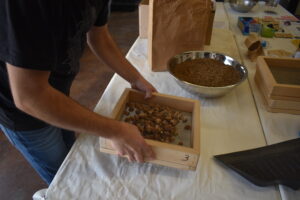
One small thing people can do is plant more native species, such as wildflowers, which provide pollinators with a food source. The farm collects, saves, and distributes native species seeds to the community. This enables community members to create pollinator habitats in their own backyards.
Collin Spriggs (Cherokee) works at both the Euchee Butterfly Farm and TAP and spoke about land restoration and native plants during the conference. In an interview with Mvskoke News, Spriggs suggested that if people want to help pollinators, the best thing to do is plant native plants with as locally sourced seed stock as possible.
“The same species of plant can be found from Oklahoma to Minnesota, to Illinois. Those places are quite different. The organisms in those environments may be the same species, but they have developed micro-adaptations to the local ecosystems,” he added.
Dr. Hung, a Professor at the University of Oklahoma who works with both the Oklahoma Biological Survey and the Oklahoma Natural Heritage Inventory, acknowledges that when it comes to pollinators, bees take up most of the spotlight. While they are an incredibly important part of the ecosystem, Hung notes that the focus should shift to more pollinators beyond bees.
“Just like how teaching everyone to raise goats and beef cattle on every acre of green grass is counterproductive to preserving our natural ecosystems, raising honey bees—which are native to Europe and feral (some would even say “invasive”) in North America—will not have a positive impact,” Hung said to Mvskoke News.
“This has been one of my big educational campaigns—to help people understand that honey bees are an indispensable livestock from the perspective of our agricultural endeavors, but not a target for conservation and not usually part of the solution, but part of the problem when it comes to protecting nature in North America,” he adds.
Hung encourages people to research which plants in their local area help pollinators most and plant seasonally. Hung also encourages people to create habitats for pollinators to live in, whether in your backyard, at your school, or at the park.
“The ‘field of dreams’ hypothesis in ecology states that ‘if you build it, they will come.’ If you have a larger property, you can even specifically target rare pollinators for protection by planting specific plants,” Hung said.
Citizen science
Dr. Taylor is the founding director of Monarch Watch, a nonprofit outreach program that educates others about ecological issues and conserves monarch butterfly populations. The organization spends time researching monarch migration patterns.
Taylor, who lives in a rural area, says he used to get annoyed by chirping crickets that would come into his house. The chirping has ceased. He now sees very few crickets, junebugs, or fireflies around his property.
Monarch Watch is nationally recognized for its Monarch Waystation Habitats, community-created environments that are enriched with milkweed and nectar plants. Anyone can create their own waystation- plans are detailed on their website. If it meets Monarch Watch’s criteria for a sustainable habitat, it can be registered amongst the other 55,553 waystations across the U.S.
“What can we do? Create habitats, that’s about all that you can do. What every organism needs is a habitat specific for that organism,” Taylor said. “What we have to do is protect the fundamental habitat that supports that species.”
Waystations contribute to monarch conservation by providing breeding areas, larval host plants, and energy sources for adults to fuel the fall migration to Mexico. They are free of pesticides and can be found almost anywhere: home gardens, schools, businesses, and parks.
Beyond monarchs, Hung notes that the average person can contribute to scientific understanding by using sites like iNaturalist.org to report pollinator sightings and provide scientists with data to better support pollinator recovery. These scientists can then take that data and, according to Hung, “use your observations to build models to formulate better preservation plans for pollinators.”
This recommendation is based on the fact that, according to Hung, Oklahoma has very little pollinator data aside from monarch butterflies. Regarding bees, scientists are still working to document exactly how many species are in Oklahoma, with the current estimate at roughly 470.
Leaf piles and delayed mowing
One of the simplest things a person can do, according to Spriggs, to help certain pollinators is to delay mowing and delay destroying leaves that fall in the winter. The delay provides certain pollinators an easy-to-use home to hide from the weather.
“Some quick suggestions are to ascribe to the ‘leave the leaves’ ideology. Many species of insects, in a variety of life stages, use this habitat to overwinter. It’s their winter home, basically,” Spriggs says.
“Delay mowing heavily in the spring, “No Mow May.” If an individual hays their property, they can implement rotational/alternating schedules to allow summer and fall plant species to go to seed,” Spriggs adds.
Pesticide use
Finally, Breckinridge states that the easiest thing people can do is to declare their homes, farms, or workspaces a non-toxic zone, free of pesticides and herbicides that harm pollinators.
“Take a portion of your yard, your farm, your work, your apartment complex, you know, those places where you frequent or you live… If you can declare at least a portion of it as a non-toxic zone, a safe zone free of pesticide and herbicide, so that those pollinators can get what they need and survive, that alone does some good,” Breckinridge said.
Hung recommends that people be careful about the chemicals and pesticides they use in their homes or on their farms.
“You can also employ eco-friendly chemical management (using fewer pesticides etc.) in your rangelands or neighborhoods,” he said.
A future path
Moving forward, Taylor believes there is still much research to be done on pollinator population declines. He explained that areas with low human activity are also seeing declines in pollinator populations. However, the solutions for the average citizen could not be clearer: we need to make space for pollinators.
“The scientists need to dive into the solutions. The citizens have to be responsible for maintaining the habitat. It’s a citizen thing, it’s an advocacy thing,” Taylor said.
Although experts have different approaches to sustaining pollinator populations, they all agree that education is the key to making a difference. Educational lectures and advocacy can disseminate information and keep the public informed, enabling them to get involved regardless of their level of expertise on the issue.
Breckinridge explained that the solution is not without its limitations. Education does not always mean action.
“I think the only real limitation is apathy. Are we, collectively and individually, going to choose to do the right thing for our lands, our people, and our non-human relatives? If the answer is yes, and I think the answer is a resounding yes from our Mvskoke and Yuchi people, then there are no limitations on how far education can get us towards solving this problem,” Breckinridge said.
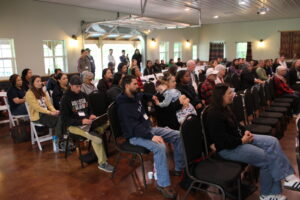
Taylor says that combating climate change is everyone’s responsibility. “That’s a citizen thing, and that’s an advocacy thing. We have to advocate for the things we don’t know we need to maintain. The idea is to maintain the status quo as long as we can,” Taylor says.
“The race against climate change is really going to catch up with us.”
The experts urge that if each member of the community does their part, no matter how small, pollinators could see a drastic improvement in their habitat.
A habitat that is just as hospitable, welcoming, and cozy as the aviaries and acres found at the Euchee Butterfly Farm.
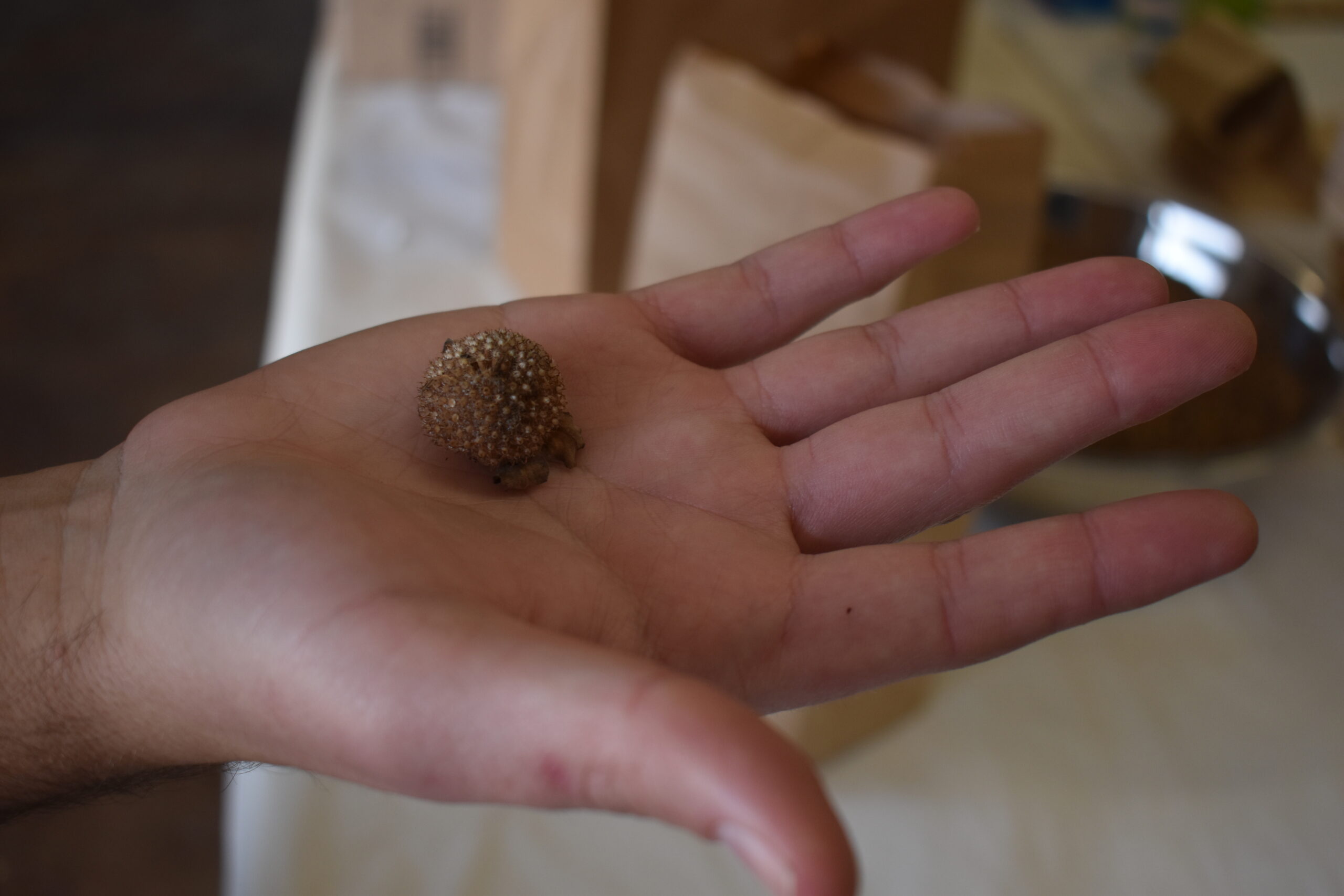
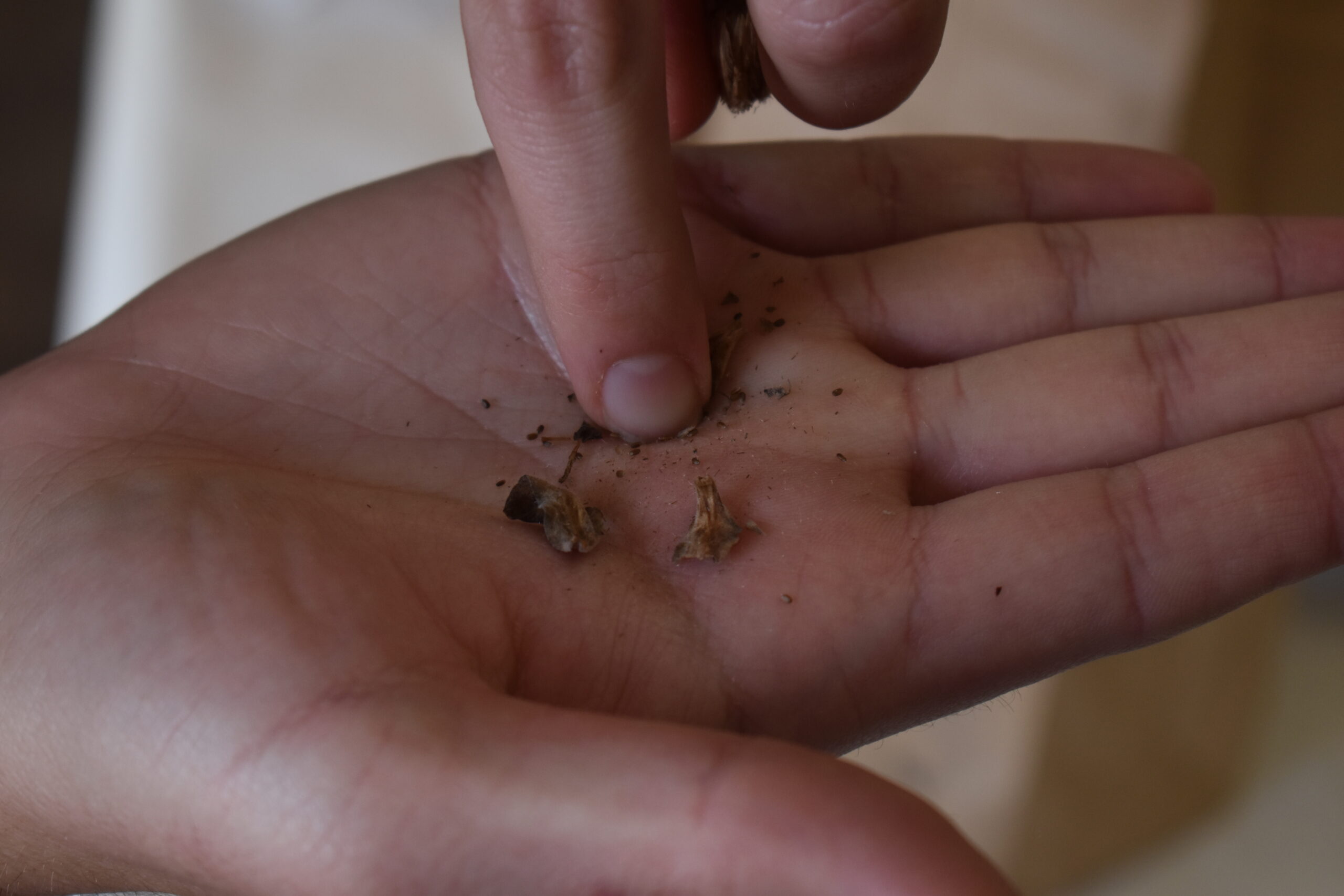
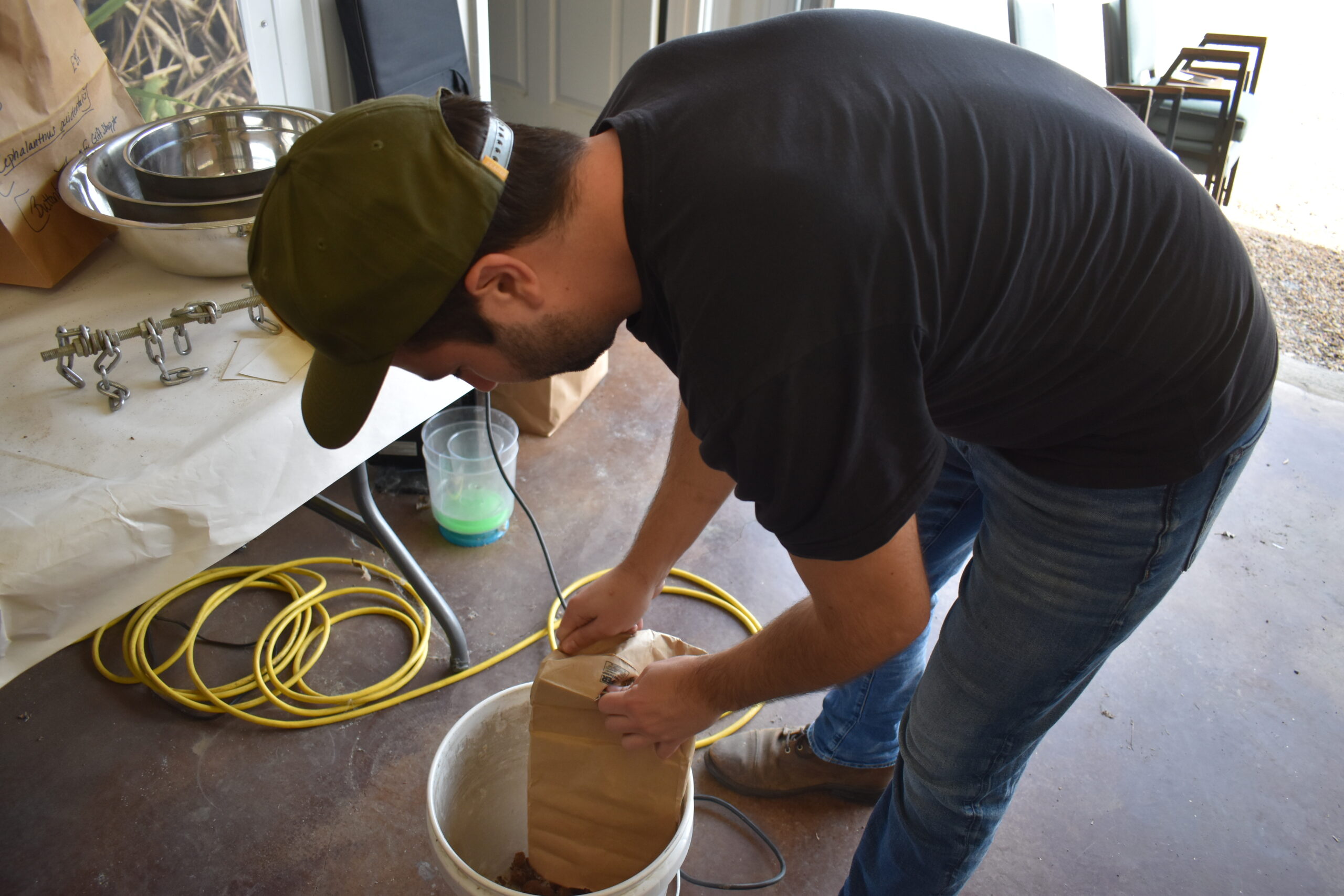
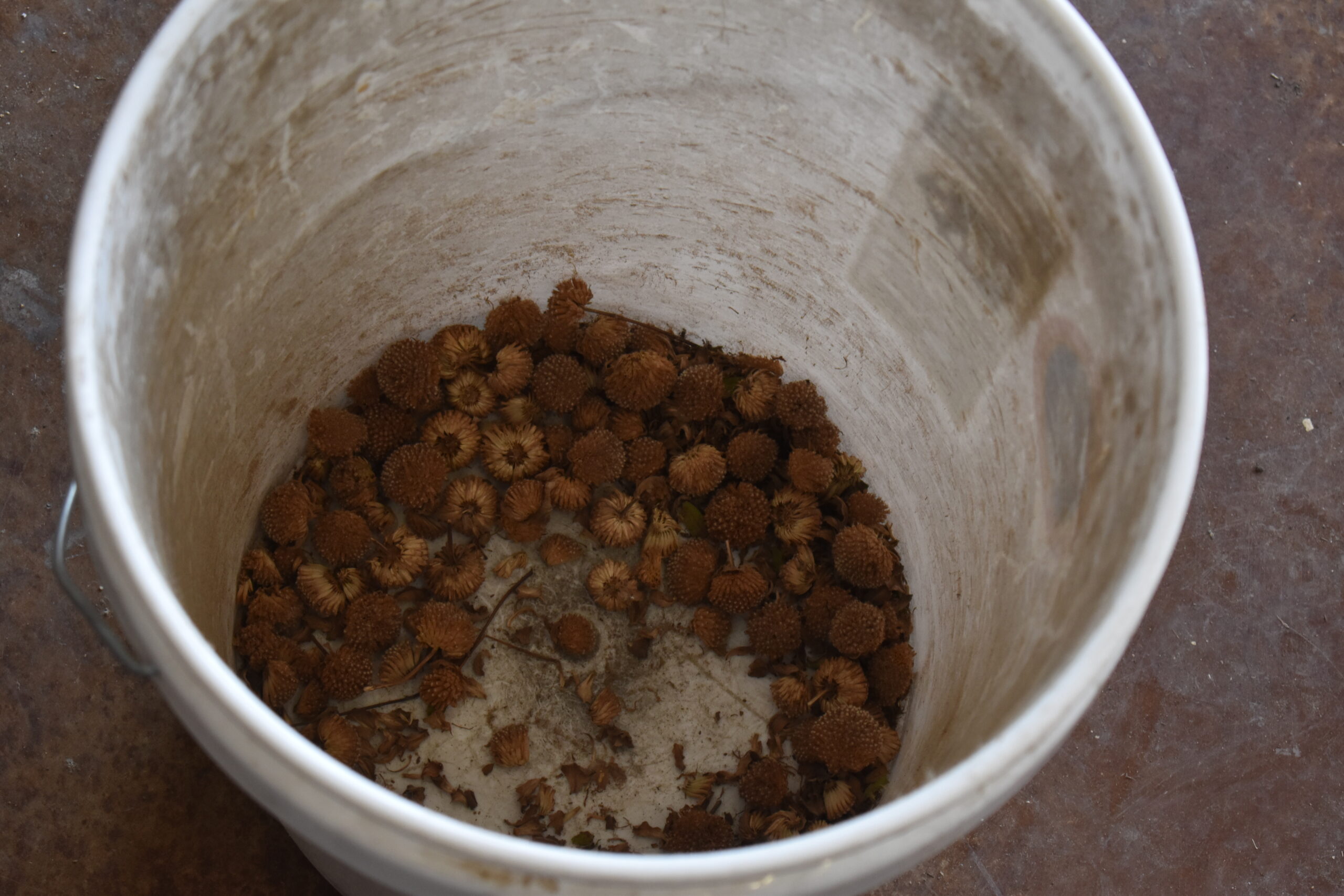
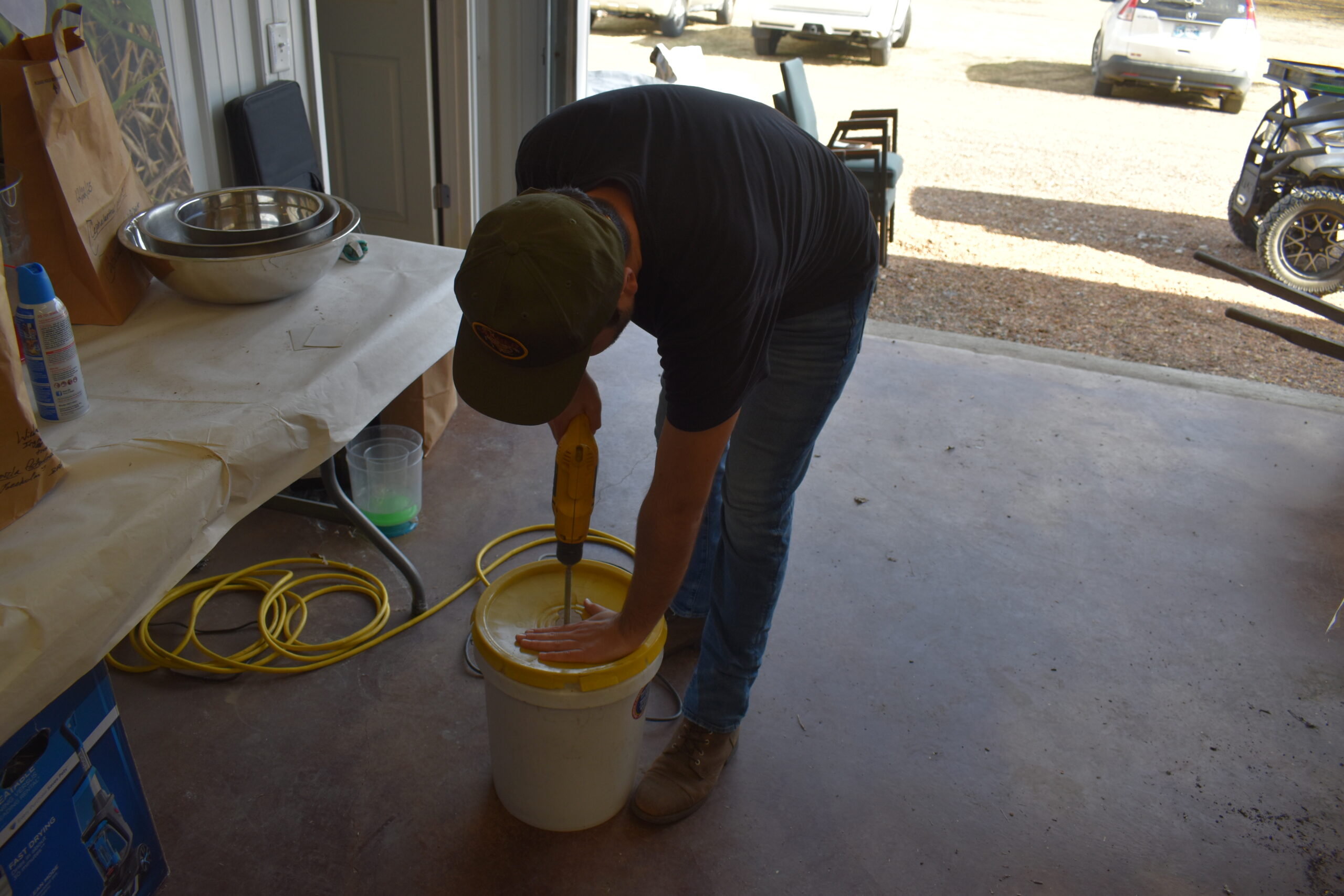
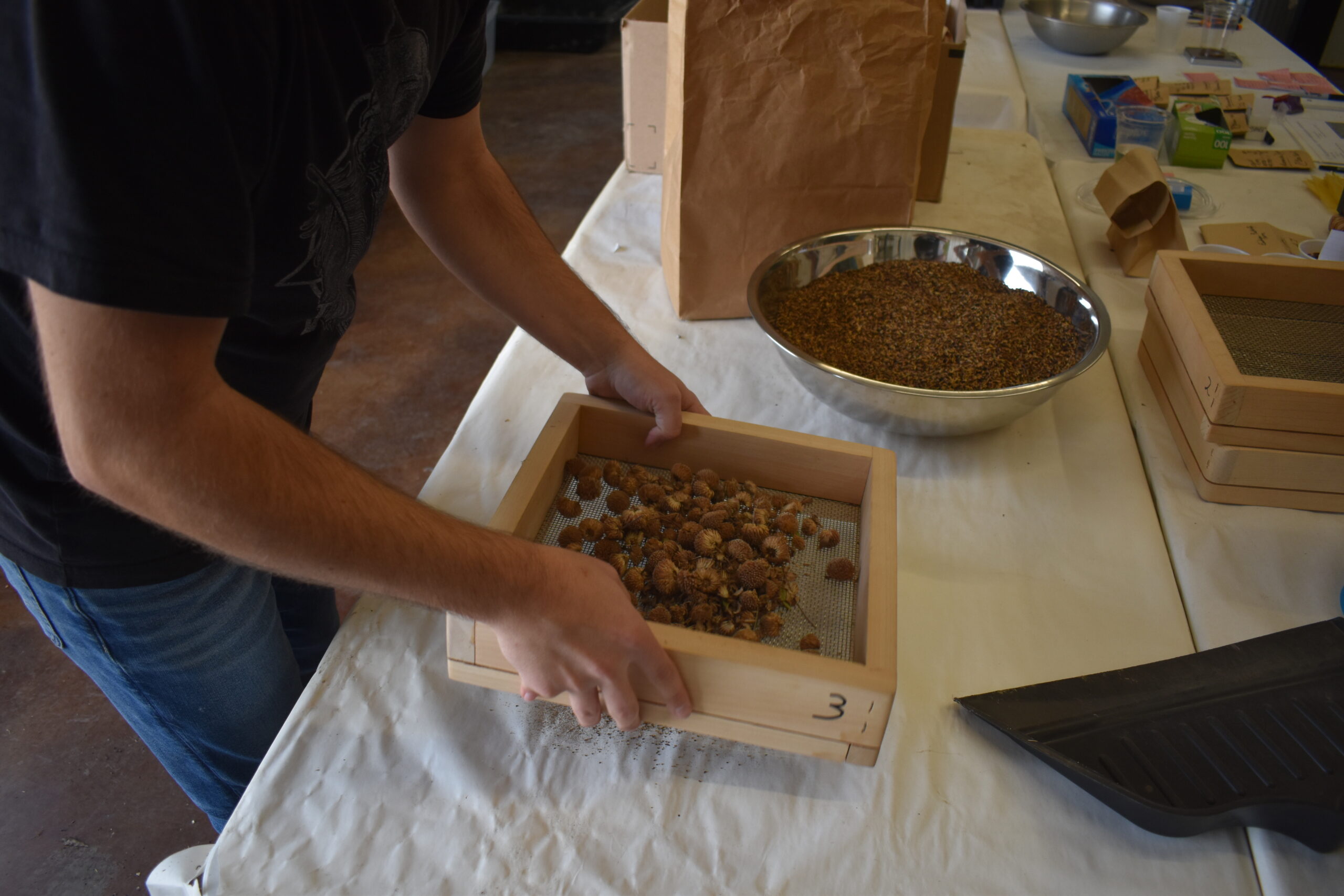
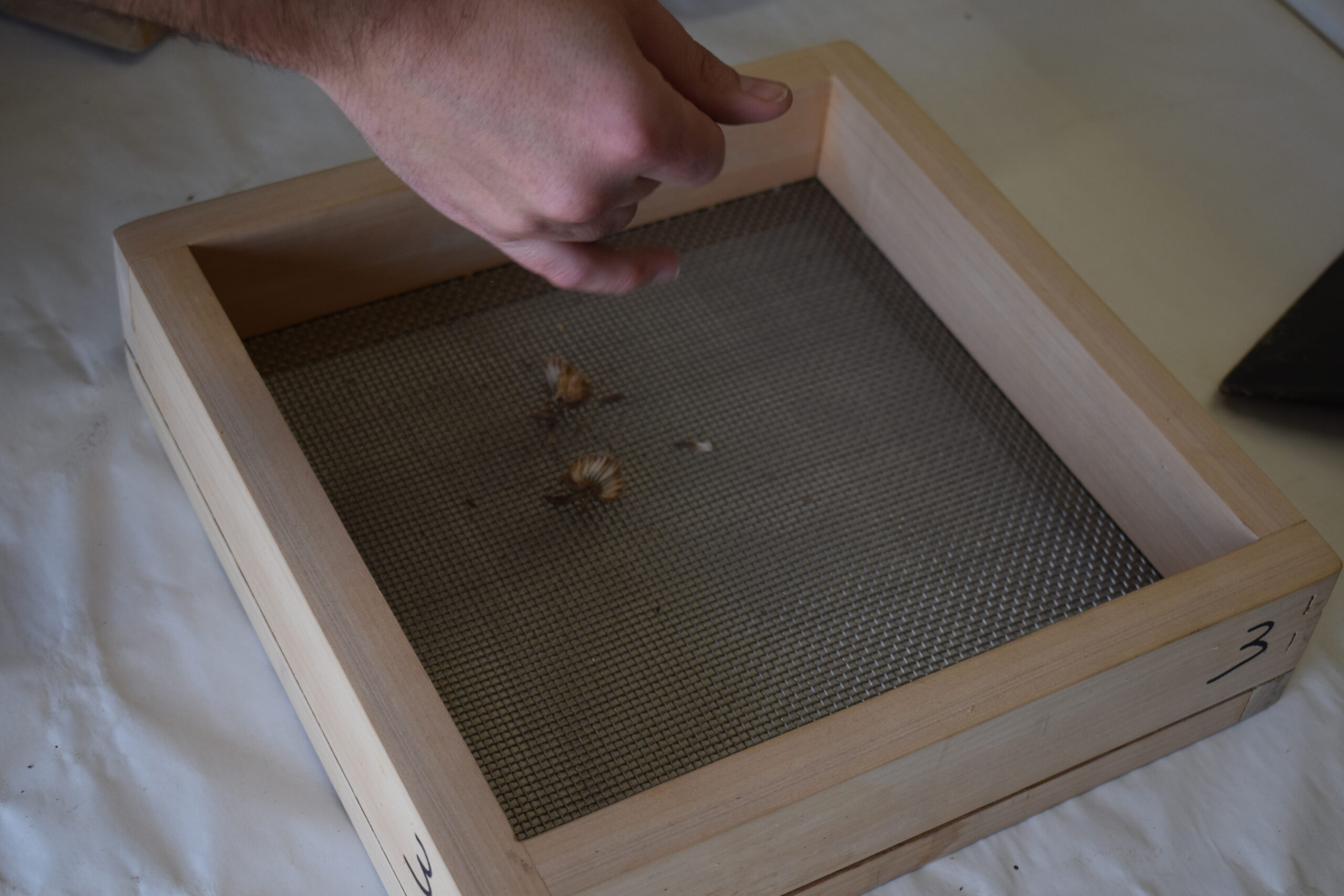
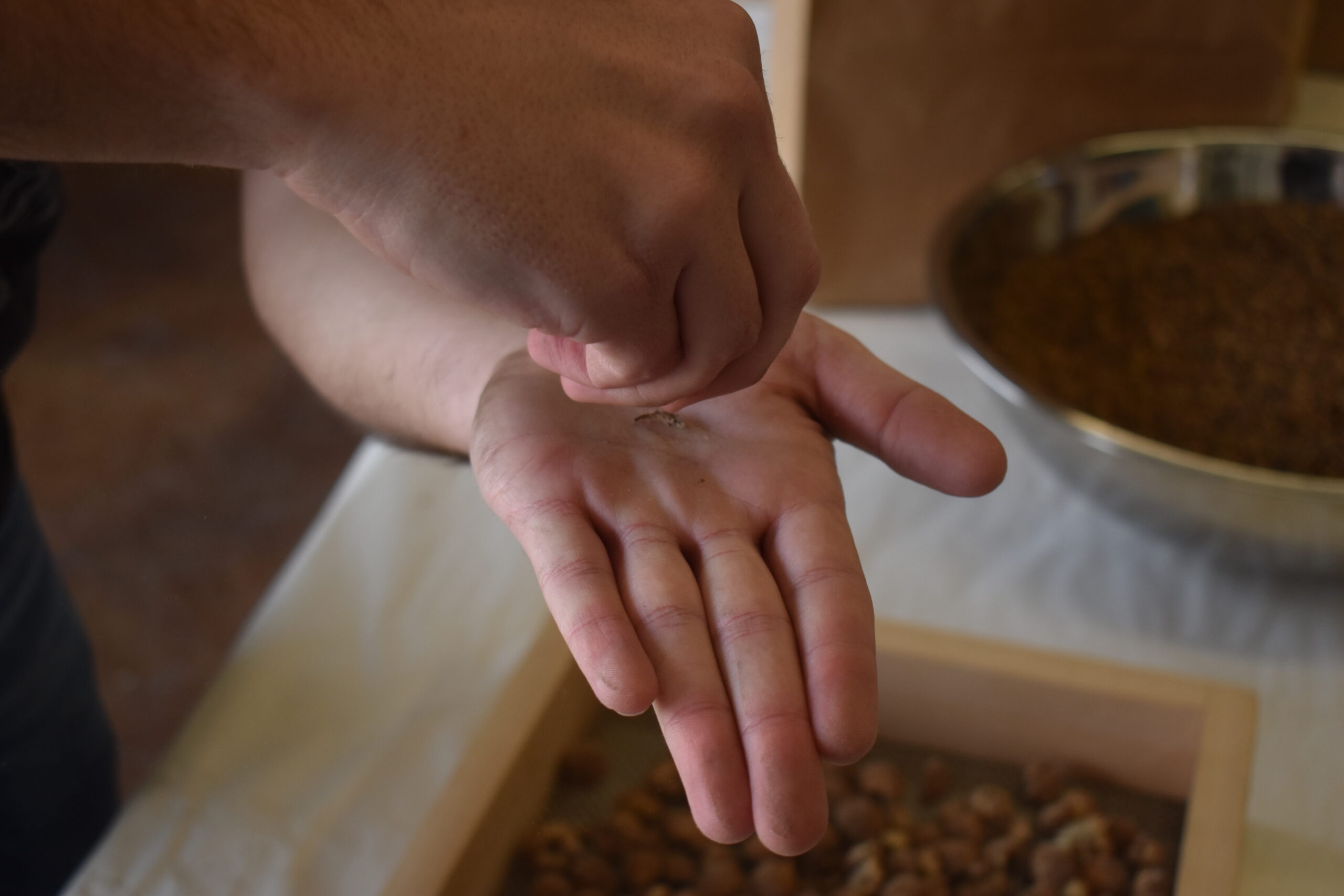
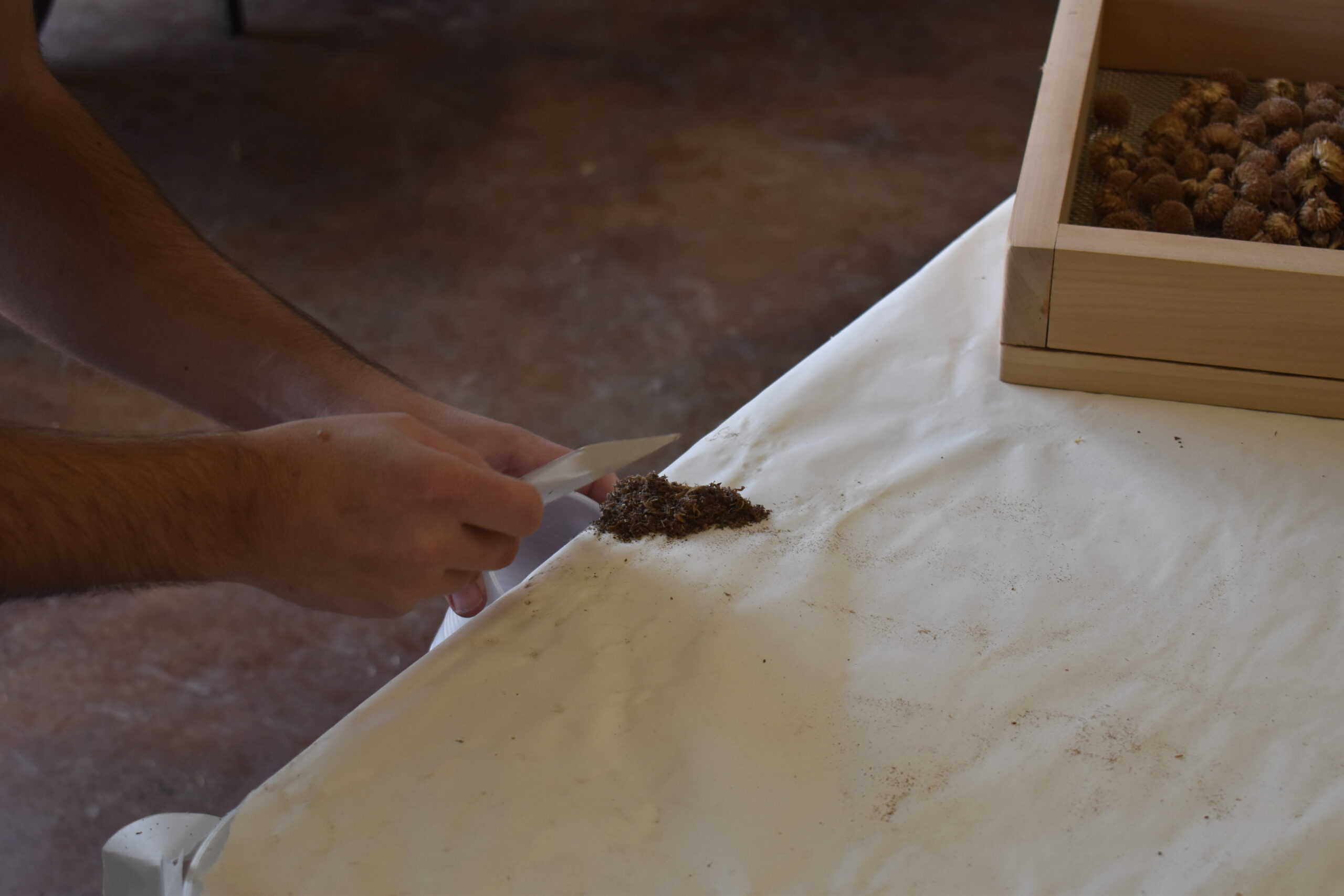
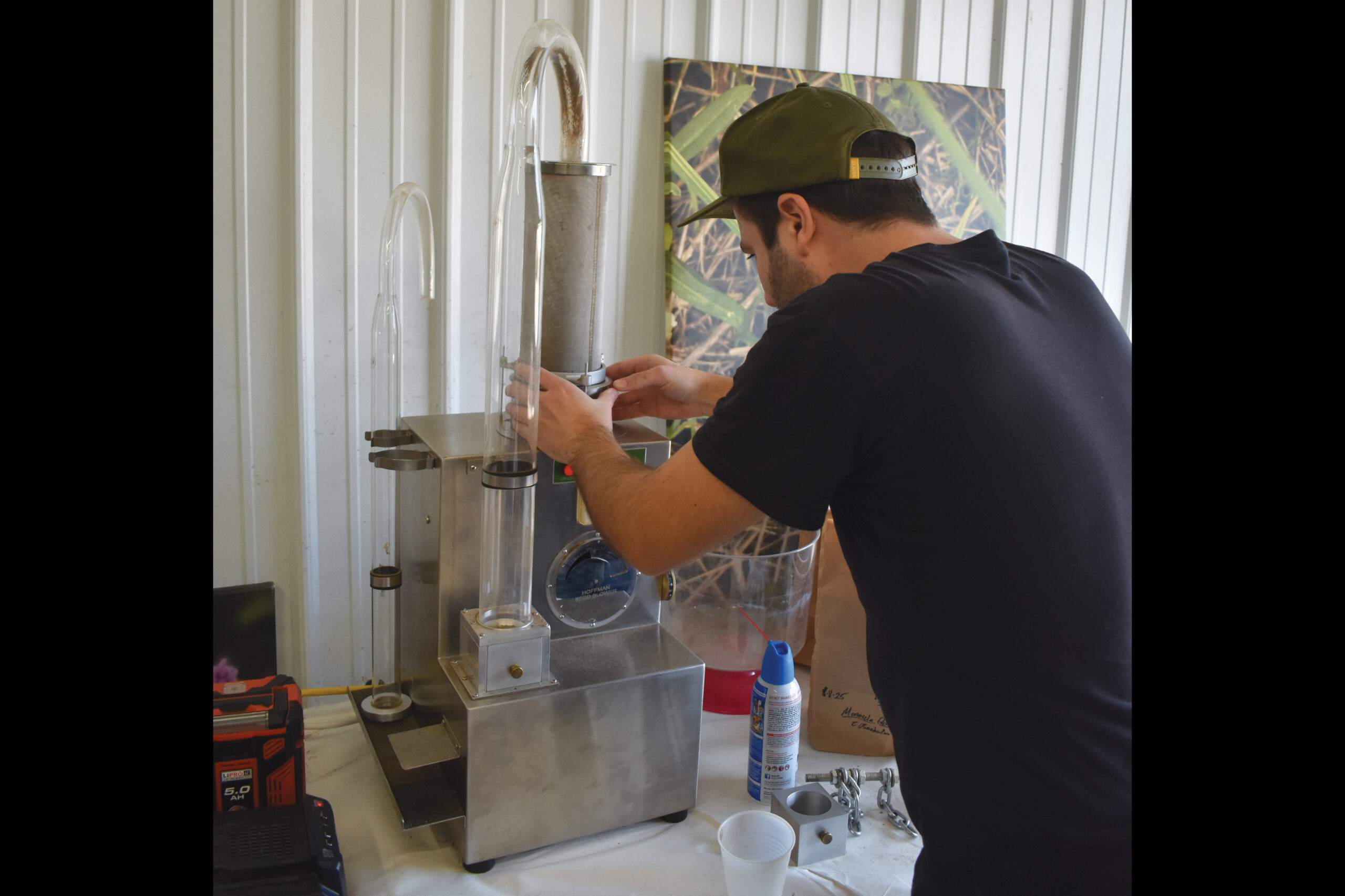
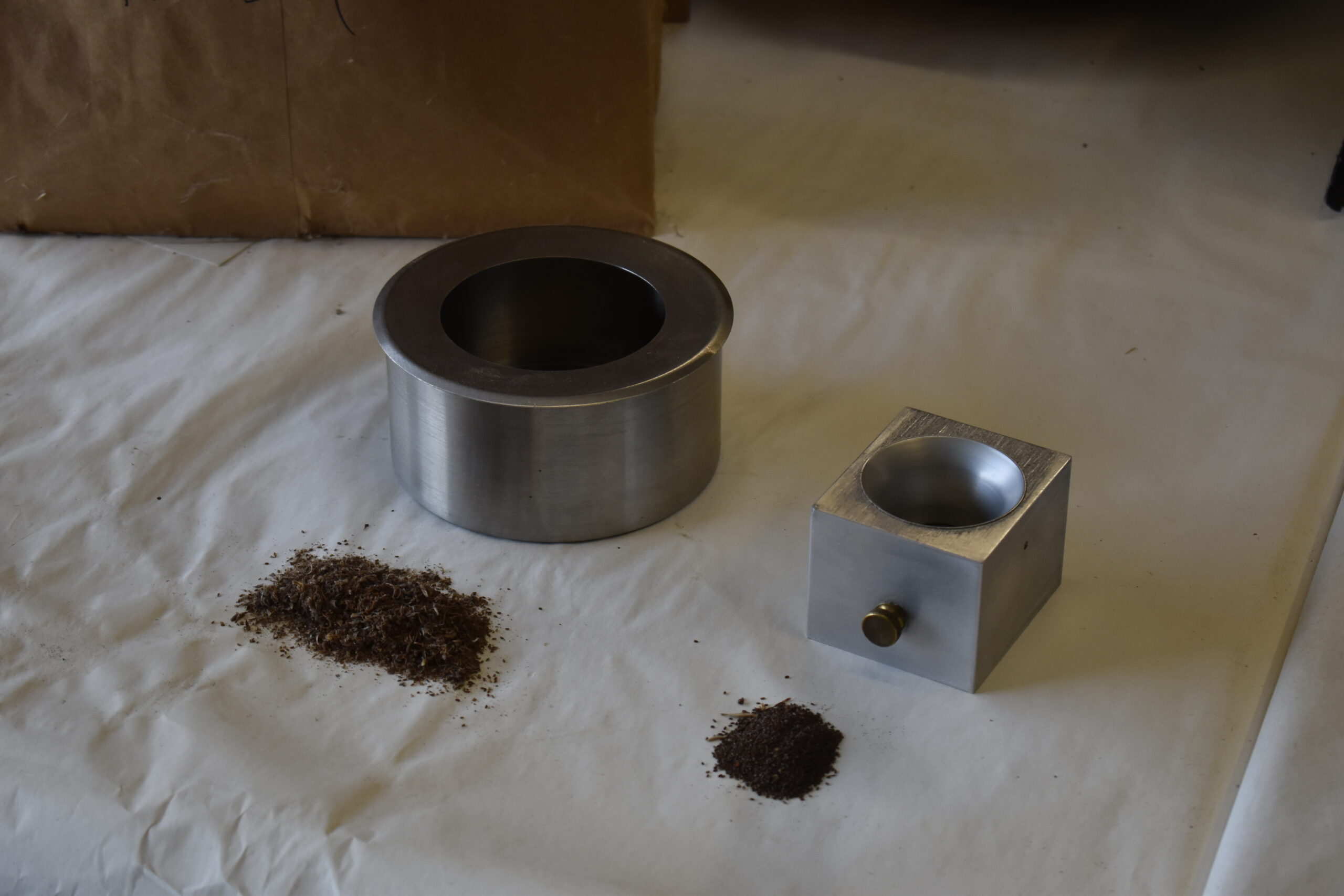

Collin Spriggs demonstrates seed processing at the Euchee Butterfly Farm from start to finish. (All Photos: MM)



Wonderful work. Informative and inspiring..