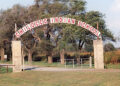
SULPHUR, Okla. – The Holba’ Pishachi’ Film Festival brought Indigenous filmmakers from across the country together on Aug. 7 and 8 for two days of films, panels, and conversations about the future of Native storytelling.
Now in its 11th year, the festival featured 12 filmmakers, producers, and actors, and was centered on the theme “Indigenous Forces in Cinema: Empowering and Lifting Voices in Film.”
Held at the Chickasaw Cultural Center, the festival showcased films across genres while giving filmmakers an opportunity to connect with audiences and one another.
For organizers and filmmakers, that space has become increasingly important as dedicated Indigenous film festivals remain limited.
“Native film festivals are becoming few and far between,” said Fran Parchcorn (Chickasaw), executive officer at the Chickasaw Cultural Center.
Parchcorn said the Holba’ Pisachi’ Film Festival has continued to grow since its creation, becoming a standalone event that attracts filmmakers from across the country. Organizers begin planning early each year, considering developments in the Indigenous film industry and which stories or issues deserve attention.
The festival mixes new releases with older films that organizers believe deserve to be brought back to audiences and includes films from a variety of genres. The festival is also not limited to Chickasaw filmmakers or filmmakers from the Southeast. Parchcorn said it is intentionally open to Indigenous filmmakers from across the country.
One of those films was The Dawes Commission, a 2014 film produced by Sandra Denney (Mvskoke) of Mvskoke Entertainment LLC, that opened the festival on Aug. 7. The film features Lillian F. Thomas (Mvskoke), who reflected on the importance of preserving Indigenous traditions and language when discussing her involvement in the project. “It’s important that we continue our traditions and most importantly, our language,” Thomas said.
Thomas also said being part of the film allowed her to honor the experiences of her ancestors while helping carry those traditions forward.
“I try to uphold what their beliefs were, and to continue to pass it on down to our future generations.”
Patchcorn emphasized a common thread: “We all have found that we have that one thing in common, and that is to tell our stories in our own way.”
Producer Jhane Myers (Comanche/Blackfeet), who brought three films to this year’s festival, said the availability of Indigenous-focused festivals is important for both filmmakers and audiences.
“There aren’t enough Indigenous-focused film festivals,” Myers said.
She said festivals like the Holba’ Pisachi’ Film Festival provide an audience for Native films and reinforce the idea that Indigenous people are an important audience for the film industry.
“When Native audiences see themselves represented,” Myers said, “they can help introduce those films to wider audiences through streaming services and other outlets.”
She also said Indigenous filmmakers bring an authenticity to their work that can be difficult for outsiders to replicate.
“Those little nuances…make your story more authentic,” Myers said.
Filmmaker Blake Pickens (Chickasaw) said that historically, Indigenous filmmakers have had limited control over how Native people are represented on screen.
Pickens, whose film “Reservation Redemption” was featured at the festival, said having spaces where Native filmmakers can tell their own stories allows them to change those narratives.
“Now that we actually have this influence and this power to tell our own stories on this platform, we’re changing the narrative,” Pickens said.
“Reservation Redemption” follows Chief Marchand Rice, who committed a violent crime as a teenager before reconnecting with his culture while incarcerated and later helping other young Native men through cultural rehabilitation.
Pickens said his cultural background influences not only the stories he tells but also how he works with other people to create them.
“It’s a communal experience for us,” he said
That sense of community was also central to filmmaker Mike J. Moran’s experience at the festival.
Moran, a Navajo, Laguna Pueblo, and Washo filmmaker from California who specializes in Native-themed horror films, returned to the festival after attending last year’s event.
He said the festival has created an environment where filmmakers from different tribes and regions can connect.
“It’s coming home for me,” Moran said. “Even though my blood’s not from Oklahoma, it’s always about coming home.”
Moran said creating spaces for Indigenous filmmakers also provides opportunities for younger generations to see Native people telling their own stories and to imagine themselves doing the same.
He encourages Native filmmakers to tell their stories before they are forgotten, saying film can preserve those stories and introduce them to audiences beyond individual communities.
For Myers, the festival also serves as a networking and mentorship opportunity. She reconnected with filmmakers she has worked with throughout her career and met emerging filmmakers preparing to take their next steps.
She said those connections allow established filmmakers to share knowledge and help others entering the industry.
Festival headliner Amber Midthunder (Fort Peck Assiniboine/Sioux) also encouraged aspiring Indigenous filmmakers to begin creating however they can, whether through traditional filmmaking programs or more accessible tools such as phones and social media.
Midthunder, who starred in “Prey” (2022), said filmmakers should find others who share their interests, seek out programs and opportunities, and continue developing their skills.
She pointed to the creators of “Reservation Dogs,” who began making work through YouTube, as an example of how filmmakers can find unconventional paths into the industry.
“We’re obviously the original storytellers,” Midthunder said. “We have something when it comes to this medium that nobody else has.”
Along with film screenings, this year’s festival included a special presentation on generational representation in the film industry by Angelique and David Midthunder, parents of Amber.
Parchcorn said those opportunities are part of what makes the festival more than a series of film screenings.
“It’s not all about the films,” Parchcorn said. “It’s about the people, and it’s about our Native people, our First American people. And bringing us all together.”
For the filmmakers attending, the gathering provides an opportunity to share stories, build relationships, and encourage others to enter an industry where Indigenous voices have not always been able to lead.
Moran said he hopes to help create those opportunities for the next generation.
“If I’m not part of it, I hope I’m one of the people that helps open the door for it,” Moran said.