“People have been playing Indian in the U.S. since the Boston Tea Party. I would argue we’ve had playing Indian, or pretendianism in different definitions for the entire existence of the United States,” Dr. Kim TallBear
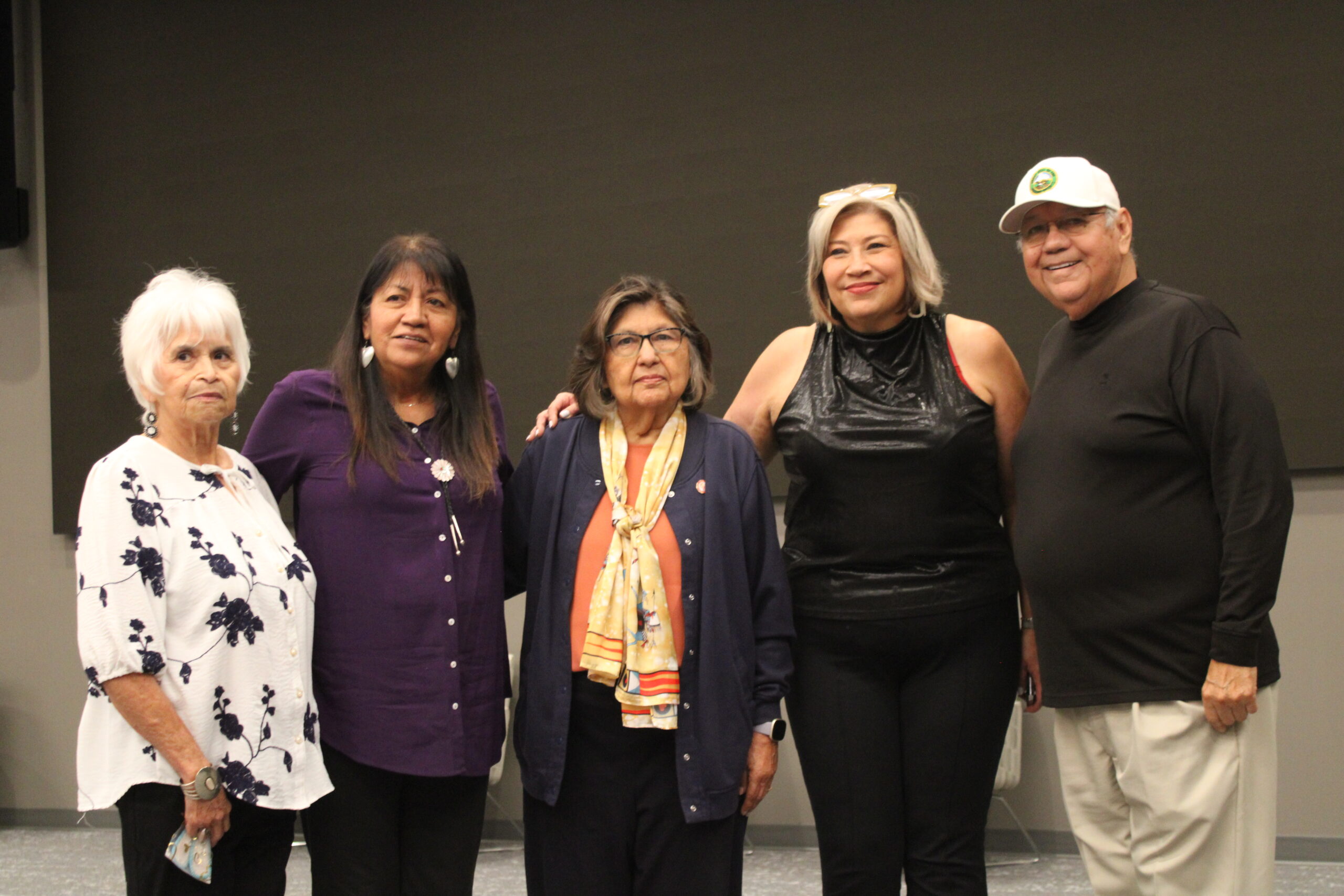
OKMULGEE – College of the Muscogee (Creek) Nation students and faculty had the opportunity to engage in academic topics on cultural identity with Dr. Kim TallBear, PhD, at the Reclaiming Identity presentation. The presentation was structured as a lecture and a learning circle, where participants shared their personal experiences on the topic.
TallBear is a citizen of Sisseton-Wahpeton Oyate and has Cheyenne and Arapaho ancestry. She is currently a professor of American Indian Studies at the University of Minnesota Twin Cities College of Liberal Arts. TallBear has previously taught at the University of Texas, UC Berkeley, the University of Alberta, and Arizona State University. Her primary expertise lies in technoscience, Indigenous sovereignty, and Indigenous self-identity.
TallBear has spoken at numerous Indigenous communities from Manitoba to Oklahoma to Hawaii. According to TallBear, many communities where she is invited to speak lack their own academic institutions.
A frequent topic TallBear speaks on is pretendianism, or fraudulent claims of Indigenous heritage.
“There are a lot of academics and Indigenous academics who are afraid to take this on,” TallBear said. “They don’t want to be called gatekeepers, identity police, be pinned with being exclusionary. So it takes some courage or just not caring what people say about you in public to take this issue on.”
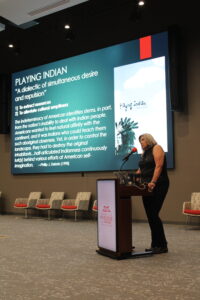
Part of the reason TallBear confronts these issues is that she doesn’t want others to be alone. She said many who speak up on the issue, particularly women, face repercussions like harassment and personal threats.
TallBear understands that not all activists have the privilege of holding a college degree, which is why she does everything in her power to spread knowledge about cultural identity issues.
Growing up in the 1970s, TallBear shared how she saw “wannabes”, or as she explained, people who changed their appearance to resemble Native Americans. She believes that now, it’s more common for people to make ancestry claims to specific Tribes. TallBear explained this can be attributed to more job and grant opportunities open in Indigenous organizations.
“You see an upsurge in pretendianism at this time because there’s benefits to be had,” TallBear said. “So I’d say it’s gotten really bad in the last 25 years.”
TallBear said the “pretendian” issue is more prevalent now than ever. She has been considered a de facto expert on the subject since 2012, when Massachusetts Senator Elizabeth Warren ran for public office. During her 2019 campaign, Senator Warren claimed Cherokee ancestry and took a DNA test to prove it.
The test faced criticism, including from Cherokee Nation Principal Chief Chuck Hoskin Jr., who exclaimed that DNA tests do not define Tribal heritage. TallBear concurs that DNA testing is not the cornerstone of defining Indigeneity.
According to TallBear, “pretendianism” can harm others directly and indirectly. She explained that it can prevent Tribal citizens from receiving job, grant, and publication opportunities.
“Pretendians” who are regarded as authorities on Indigenous knowledge can be harmful to students who study under them. False information can make students question everything they know about their Tribal background.
While discussing the solution to fraudulent Indigenous heritage claims, TallBear said academic policies need to change. She does not believe students or faculty should be allowed to simply self-declare their Tribal affiliation on a college or job application.
“Are we going to privilege admissions from Indigenous people that self-identify? Are we going to require them to show Tribal enrollment? Are we going to require them to just show genealogy? That would include non-Tribally enrolled people. I think we need these policies in the book.”
To learn more about TallBear’s work, visit her website, kimtallbear.com/research/.