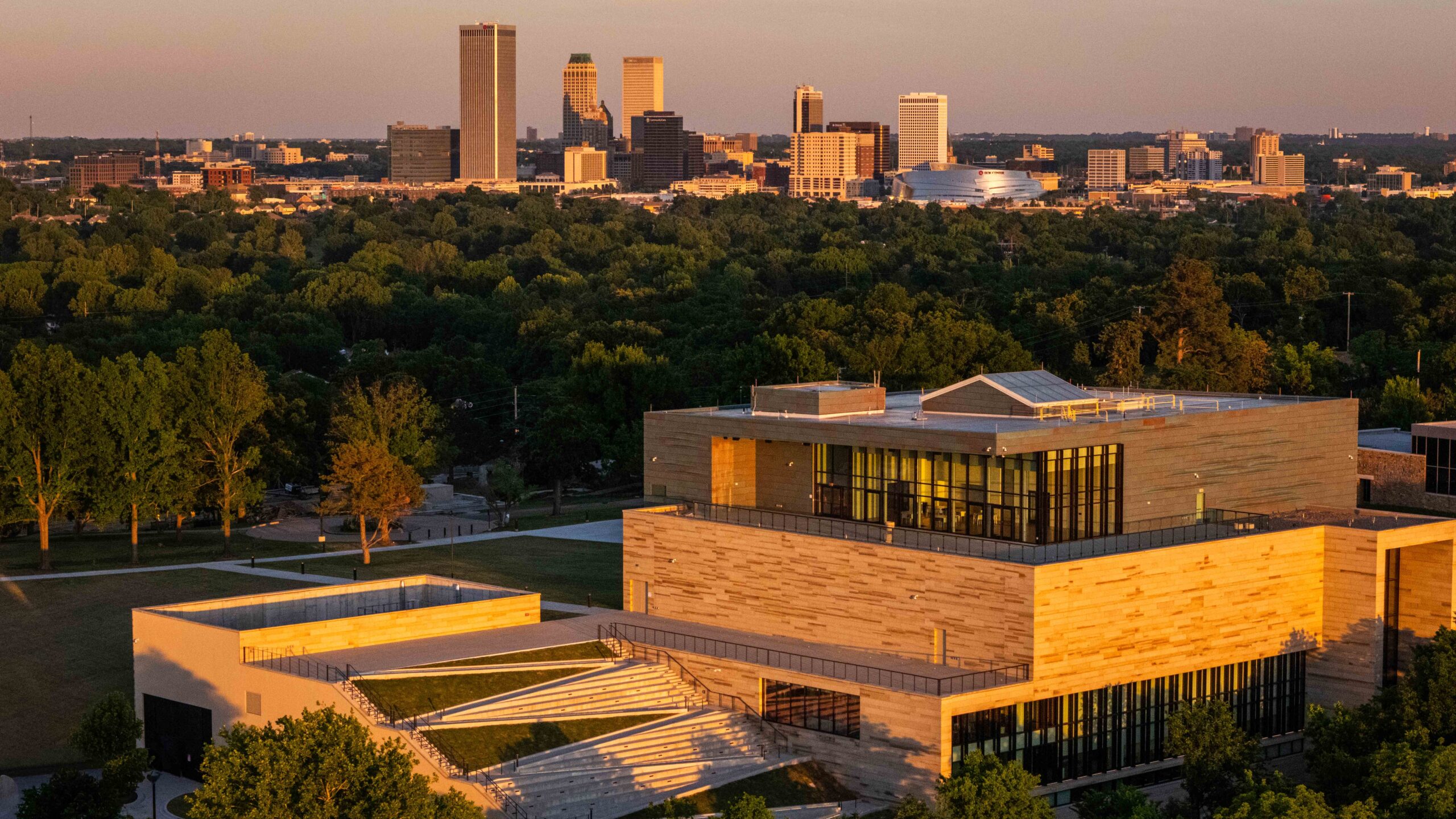
TULSA – When the doors of the new Gilcrease Museum open in March 2027, visitors will encounter more than a redesigned building and newly installed artwork. They will find a museum working to tell the histories of the Americas through the voices of the Indigenous communities whose cultures are represented in its collections.
For Mvskoke citizens, that includes artworks by Mvskoke artists, traditional hymns, and exhibits exploring the Nation’s history, all within an institution founded by a Muscogee (Creek) citizen.
Chelsea Herr (Choctaw), the curator of Indigenous art and culture at Gilcrease Museum, said the transformation extends beyond the museum’s physical reconstruction.
“We’re still working with the same collection. Sure, we’re adding to it, especially with the work by contemporary artists, but it’s still the same collection,” Herr said. “What we’re doing is including more voices narrating that collection.”
The museum closed in July 2021 for a $140.9 million reconstruction project, replacing its aging facilities with a modern building designed to better preserve its collections and provide new exhibition experiences.
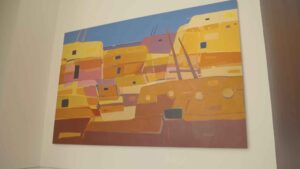
Installation began in October with Pueblo Sunset, a 1978 painting by Hopi artist Dan Namingha, becoming the first artwork placed in the new galleries.
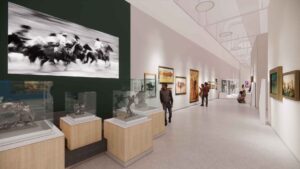
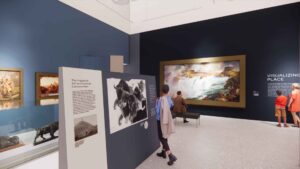
Since then, crews have continued installing approximately 1,000 objects across 14 long-term galleries. Three additional galleries will feature exhibitions that rotate more frequently.
Herr said the museum has nearly completed hanging two-dimensional artwork and has begun installing pottery, baskets, sculptures, and other three-dimensional pieces.
According to Herr, more than 60% of the Gilcrease collection is Indigenous in origin, a significant aspect of the museum’s holdings that she believed was not adequately emphasized in its previous exhibitions.
As planning began for the new galleries, museum staff reconsidered how those collections should be presented and who should be responsible for telling their stories.
Gilcrease initially invited 50 federally recognized tribes to collaborate on the exhibitions. Approximately 35 participated at varying levels, with some communities serving as co-curators, helping select artwork and write gallery labels.
“We shouldn’t be the ones telling these stories,” Herr said. “We should be providing the platform for those stories to be told by the communities who actually have lived through them.”
That collaboration includes the Muscogee (Creek) Nation.
One section of the museum will address the Native American Graves Protection and Repatriation Act (NAGPRA), highlighting the responsibilities involved in returning ancestors and cultural items to their communities.
Herr said the museum worked with a representative from the MCN Tribal Historic Preservation Office to share the perspectives of those responsible for repatriation work.
Rather than displaying collections of objects, the section will focus on the experiences and responsibilities of Tribal preservation and repatriation officers.
Among the Mvskoke works featured in the galleries is a study for a proposed mural by artist Acee Blue Eagle.
The artwork depicts a map of Oklahoma with Gilcrease, Tulsa, and Mvskoke territory positioned at its center. Roads and waterways extend outward toward other Native cultural centers across the state.
Herr said the work offers an alternative perspective on Oklahoma’s geography, placing Mvskoke territory at the heart of the state’s cultural landscape.
Visitors will also encounter work by Mvskoke artist Bobby C. Martin, who collaborated with the museum on digital installations.
One interactive exhibit, located in a gallery exploring the forced removal of Southeastern Tribal nations to Indian Territory, will feature Mvskoke hymns recorded by singers from First Indian Baptist Church of Moore.
The recordings will be accompanied by transcriptions and English translations, allowing visitors to listen to the hymns while learning about their cultural and historical significance.
Herr said the exhibit highlights how Mvskoke communities have maintained cultural traditions through generations of displacement and change.
“The goal of that interactive is to highlight how Native communities and specifically in this case, Muscogee Nation has used certain cultural traditions, kind of cultural histories like hymn singing, as a mode of surviving and thriving,” Herr said.
The museum’s renewed focus on Indigenous perspectives also draws greater attention to its founder, Thomas Gilcrease, a Muscogee citizen whose oil wealth from lands allotted to him helped establish the collection.
Herr said Gilcrease’s interest extended beyond collecting artwork and historical materials. He supported working Native artists and sought to use museum revenue to benefit Native youth and education.
However, the museum also intended to examine more complex aspects of his legacy, including his involvement in archaeological excavations that contributed to collections of cultural materials that were later subject to repatriation.
Herr said acknowledging those histories is an important part of the museum’s responsibility today.
“I’m careful not to glorify Thomas Gilcrease,” Herr said, emphasizing the importance of transparency and collaboration in addressing the institution’s history.
Beyond its artwork, the new museum will introduce interactive experiences and exhibition spaces designed to encourage visitors to engage with its collections in different ways.
One specially designed gallery will house light-sensitive historical maps, treaties, and manuscripts, some more than 500 years old. The room will remain dark when unoccupied, with lighting that gradually illuminates the materials as visitors enter.
Herr said the museum is also exploring future educational programming and partnerships with Tribal communities, including opportunities designed specifically for Native youth.
Gilcrease has previously worked with Tulsa Indian Education to provide art camps and educational experiences for students.
While admission pricing for the March 20277 reopening has not yet been announced, details about potential discounts or affordability programs for Tribal citizens and families also remain unconfirmed.
For Herr, the ultimate goal is to create a museum where visitors, particularly Indigenous children, can recognize their own histories and experiences.
“I know growing up as a kid, I didn’t always see myself or my family in Oklahoma represented in museum spaces,” Herr said. “It sounds simple sometimes to say that representation matters, but it truly does.”
She hopes Mvskoke youth, in particular, will recognize the significance of an institution founded by a citizen of their own Nation and see their communities reflected throughout its galleries.
“For me, the biggest thing is that I want any visitor, any visitor, to walk into the front doors of the museum and think I belong here,” Herr said.