By Thomas Jackson/Reporter, Meredith Johnson/Reporter
TULSA – The University of Tulsa and the Muscogee (Creek) Nation are collaborating on a digital rematriation project known as Mvskokvlke Hofone Enfulletv Rastvwetv (To Bring the Ways of the Mvskoke Back). The project is led by MCN Oral Historian Midge Dellinger, Director of the McFarlin Library’s Special Collections Department at the University of Tulsa, Melissa Kunz, and Dr. Sara Beam, a Senior Lecturer of First-Year Writing at the University of Minnesota-Twin Cities who previously worked as Applied Associate Professor of English and Creative Writing at the University of Tulsa. The project is funded by the Mellon Foundation’s Public Knowledge Program.
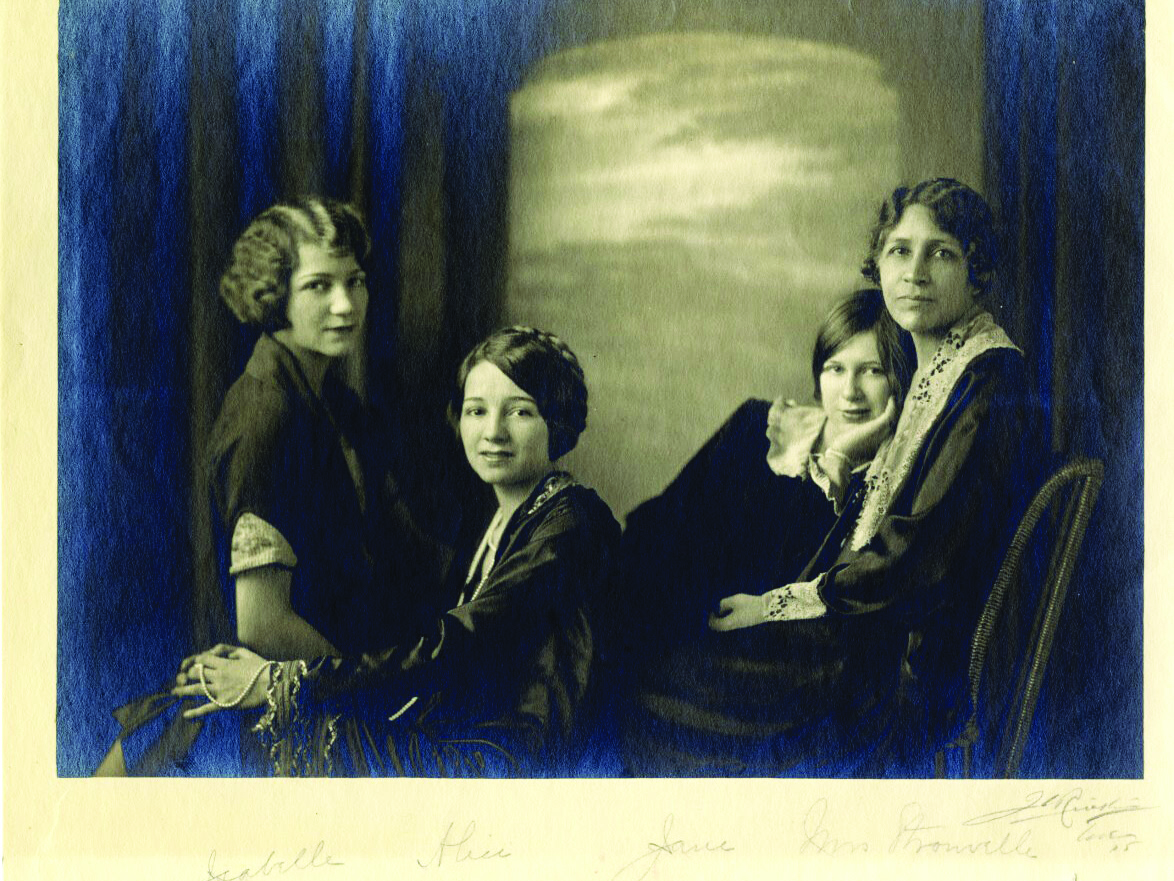
According to TU, the project intends to digitize and make publicly available the Robertson-Worcester Collection, which comprises a wealth of Mvskoke documents and artifacts donated to the university in 1931 by Alice Robertson. The materials in this collection involve or touch on nineteenth-century Mvskoke culture and history, and also cover the histories of the mission institutions throughout the MCN. While the collection comprises materials from Robertson and her mother, Ann Eliza, it also reveals the interwoven, interconnected histories of the MCN and TU.
(Image Courtesy: Alice Robertson Collection, OHS)
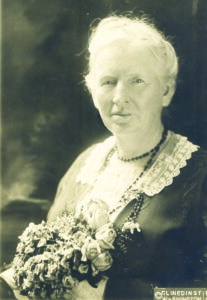
Robertson’s missionary family produced numerous Mvskoke language translations, including Mvskoke translations of the Bible and church hymns. The multifaceted Robertson wore many hats in her lifetime- educator, business owner, postmaster, and the first woman from Oklahoma to serve in the United States Congress. Robertson was born at the Tullahassee Mission in 1854, where her grandfather, Rev. Samuel Worcester, was a missionary. After attending college, she taught at Tullahassee and the Carlisle Indian School in Pennsylvania before establishing the Nuyaka Mission. Robertson then headed the Presbyterian School for Indian Girls (PSIG), the Indigenous boarding school that later became Henry Kendall College, which eventually evolved into the University of Tulsa.
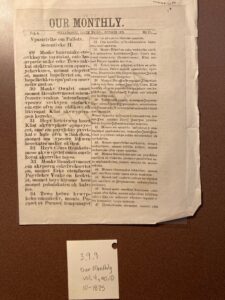
Citizens will be able to find photographs of Mvskoke ancestors, speeches, newspaper articles and other community material. The collection also contains many documents in the Mvskoke language, a fact Dellinger emphasized. Dellinger shared that the collection includes original copies of monthly newspapers in the Mvskoke language from Tullahassee Mission as well as written correspondence in the language between Ann Eliza and Mvskoke and Seminole ancestors.
The project will also digitize the Indians of North America Historical Manuscripts and Documents, 1724-1981 archive, which includes documents, correspondence, and photographs. The materials relate to Tribal governments, citizens, and lands, including MCN pre-removal and allotment era documents.
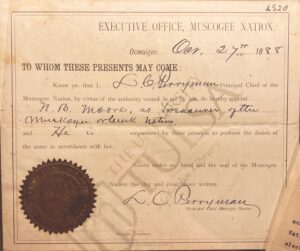
Dellinger hopes that the project will encourage citizens to use the sizable collection to learn Mvskoke history through the lives of their ancestors. “The Alice Robertson Collection provides a significant primary resource to utilize in learning about the lives of mid-nineteenth-century to early twentieth-century Mvskoke people,” she shared.
The team views the work as a “rematriation.” They use the term in honor of the matrilineal family traditions of the Mvskoke people, and to emphasize their approach to handling the documents and information they found – one that stresses the importance of returning Indigenous knowledge through archives that will be publicly accessible.
Beam, later clarified, saying, “Both repatriation and rematriation can be in physical or digital forms, and they both involve a return of objects and/or knowledge. The difference is that a rematriation includes not only returning objects/knowledge but also centering women’s roles in work, the tradition of women’s leadership, and the familial, spiritual, and cultural value of the object/knowledge being returned.”
The project was initiated by Dellinger and Beam, who recognized the need to bring the archive to the Mvskoke people. “It became very apparent, very quickly, the abundance of Mvskoke history and language that is in that collection,” Dellinger said. “So, Sara and I kicked around this idea for a long time of getting this entire collection digitized and therefore, more accessible to the Mvskoke people and to the general public.”
“It has turned into what I think is a pretty amazing digitization project. All this Mvskoke history and language, it’s a very significant collection to us as Mvskoke people.”
Beam echoed this sentiment, drawing on the histories of TU and the MCN.
“This direct connection between all of it, and that’s something that, as a writing and English teacher, I want everybody who’s studying and practicing writing in English at the institution to know, have a sense of like, ‘Where are you?’ Physically, and also culturally, and also in a historical moment,” said Beam.
One of the significant pieces has been the University of Tulsa’s Special Collections Department and its director, Melissa Kunz. Beam and Dellinger reached out to Kunz when they were first assembling the project, and she was instrumental in the process by providing information and coordinating with additional staff members.
“This was driven by Sara and Midge’s idea to engage in a digital rematriation process,” said Kunz, who was able to provide background information on the collection and the phases for the digitization process.
Kunz is also involved in growing and managing the necessary team to initiate the specialized, intensive digitization process. Since Nov.1, 2025, the project has expanded to include two digital archivists and a graduate assistant: Miranda Bickford, Elissa Howe, and Kara Hodo (Choctaw Nation).
Bickford shared that to date, the archival team has completed a collection condition report and is working on inventories. “By the end of the project the Alice Robertson Collection and the Indigenous Peoples of North America Muscogee (Creek) papers will be inventoried, cataloged, reorganized, rehoused, digitized, uploaded to both McFarlin’s Special Collections and the Muscogee (Creek) Nation National Library and Archives Digital Archives, and have new finding aids, with Muscogee (Creek) citizens usage in mind,” Bickford wrote.
The goal is to make the digital collections available for online access by the end of the grant period, which is the second half of 2028. The team added, “Public ease of accessibility is one of the core purposes of doing this project. The entirety of the Alice Robertson Collection and the Muscogee documents found in the Indigenous Peoples of North America Historical Documents and Manuscripts Collection will be freely and publicly accessible online from McFarlin Library’s digital archive– no account required for access.”
In addition to access through TU, Dellinger emphasized that Mvskoke-specific documents from the collections will be accessible online through the MCN National Library and Archives digital archive.
In the project’s final phase, the team aims to engage directly with Mvskoke communities to share their work and the history they have gathered. The goal is to bring the collection to those who cannot visit Tulsa to view it in person.
Beam stressed that they are looking for any connections to the Robertson-Worcester collection that the Mvskoke people may have. “We would love to hear from, you know, anybody who has a connection to the collection,” said Beam.
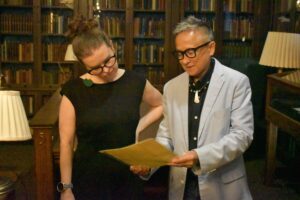
“So those kinds of human connections are something that we value as part of the project too.”
Beam added that the McFarlin Library is open to the general public, and its Special Collections Department is also open to the public by appointment.
“I know not everybody can make it to Tulsa, but if you can, TU’s Special Collections Department in McFarlin Library is open to the public, so the public can call up there and make an appointment,” Beam said. “You can also search the collection online, and then you can search the special collections catalog, including through a lot of the Worcester and Robinson papers. It’s not complete, but, you know, you might find something that mentions a name that’s relevant and be able to actually go in and see it.”
This project is not the first collaboration between TU and the MCN. The Nation and the University have been collaborating on the PSIG Project, a 2021 initiative that identifies the students of PSIG and tells their stories through in-depth archival work. The team includes Dellinger, Beam, Dr. Kristen Oertel of the University of Tulsa’s History Department, Dr. Laura Stevens formerly of TU and currently Director of the Honors College at Auburn University, and numerous graduate students and staff.
This article has been updated since the date of its initial publication.