Glenpool – The Muscogee (Creek) Nation Stroke Prevention Program held the “SKO Red” event at the Glenpool Conference Center on Feb. 25. The event aimed to help citizens learn about stroke risk and encourage healthier choices. They had activity stations, walking program enrollment, hands-on CPR classes, and chair yoga. Everyone who attended received a free t-shirt, goodie bags, and a box lunch.
“The event encourages early detection, healthy lifestyle choices, and empowers Mvskoke citizens to take proactive steps towards preventing stroke,” stated MCN Health Prevention Program Nurse Navigator Angela King.
They had chosen “Sko Red” for the theme because of the native slang “SKODEN,” which means “let’s do this,” and red is the color of heart health month.
This year, they were given away two prizes at the event: Bluetooth pressure monitors and a salt book called “Eat Less Salt” from the American Heart Association. This book provides examples of how much salt is needed, recipe modifications, and modifications for eating out, which can, in the long run, help reduce some health risks.
King pointed out that women do have a higher overall risk than men for strokes and heart attacks, and their program wanted to make sure that everyone has education for reducing their risk.
“Strokes and heart attacks are 80% preventable for everyone. We can reduce that risk by aiming for 30 min of activity most days, getting 7-9 hours of sleep per night, giving nicotine and alcohol the boot, practicing healthier coping habits (because some stresses we can’t eliminate), making healthier eating habits, & management of our chronic diseases, such as diabetes, hypertension, & high cholesterol,” stated King.
Their program provided information in their goodie bags, which included a neck massager and a pedometer watch. They had wallet-sized pocket cards to track activity and healthy numbers for blood sugar, blood pressure, and cholesterol.
Other items offered in the bags included informational reminders. “There are magnets we can stick on our fridge or desk, so it reminds us of what to do if we are ever in that situation, because most of us don’t think as clearly in that moment of panic so frequently looking at these can help with memory retention for those stressful events,” King explained.
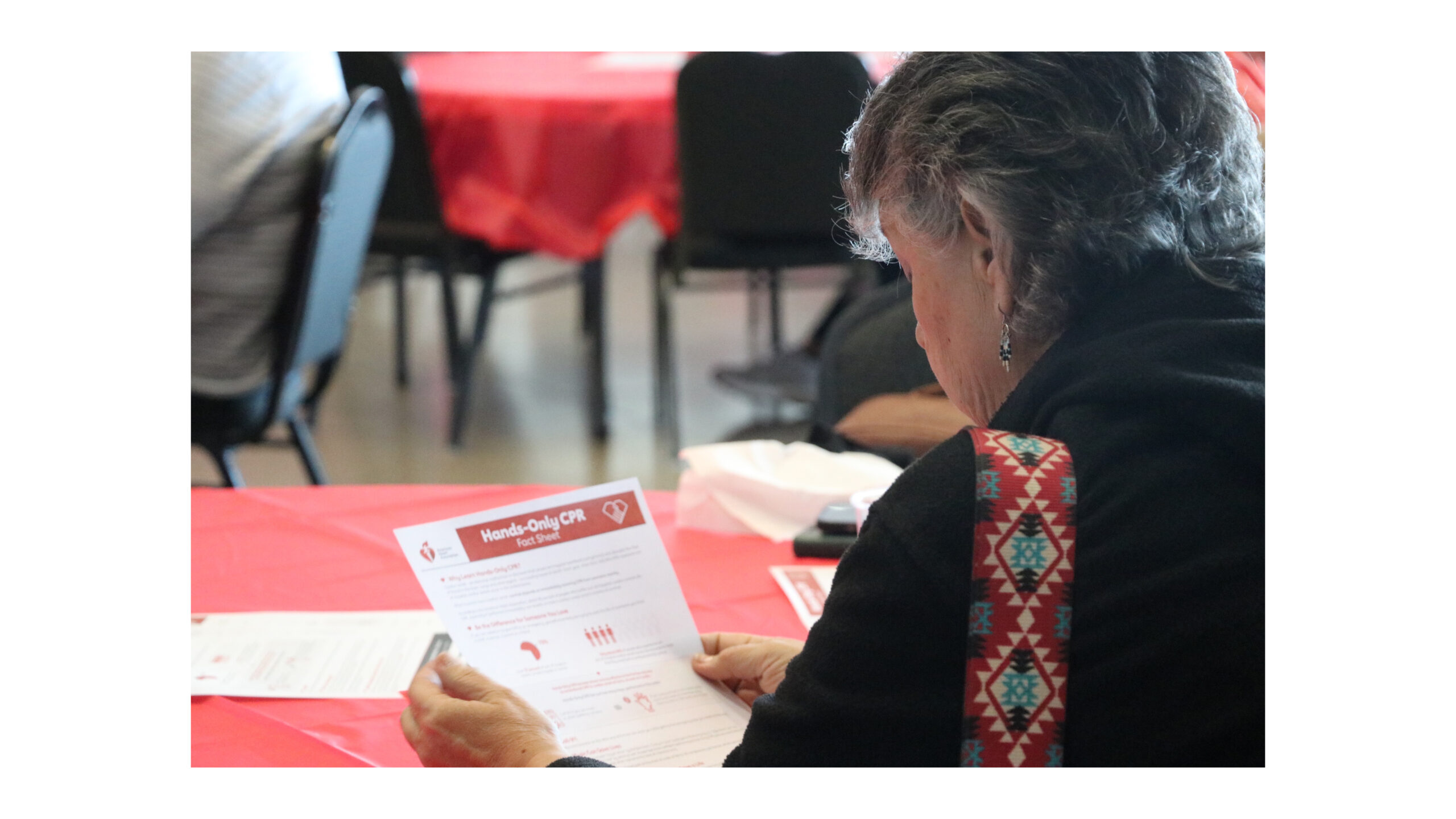
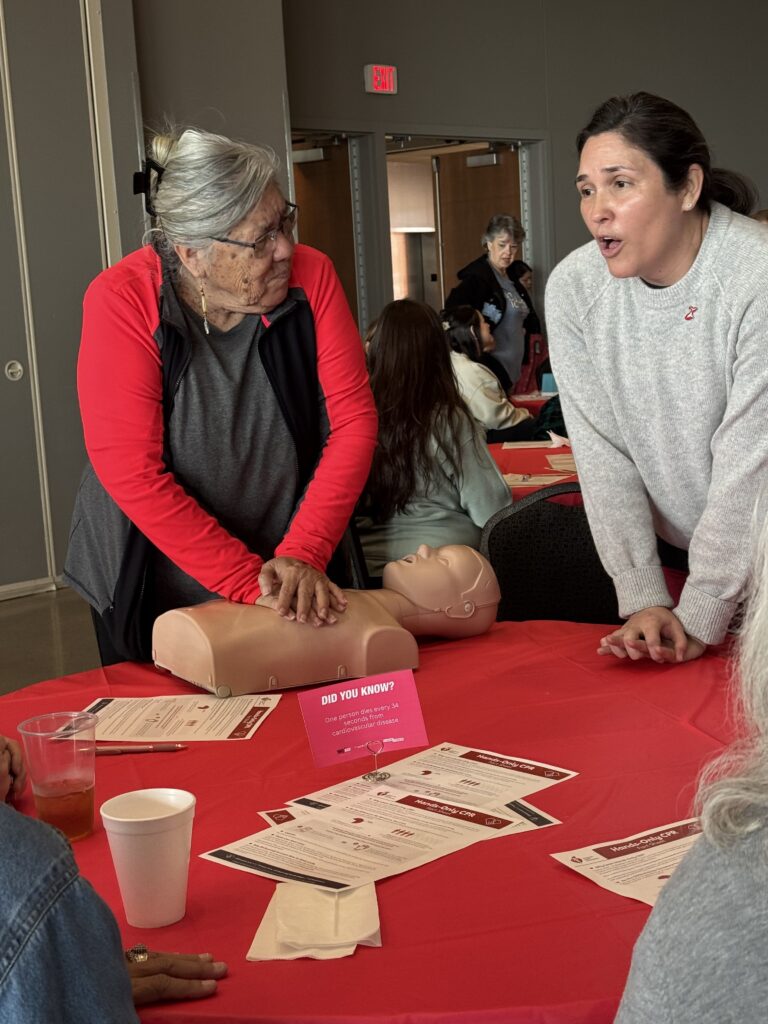
The Hands-Only CPR class was a noncertification training; however, participants were given two steps proven to help save a life. They wanted citizens to know what to do in a situation, giving them confidence and the skills they would need until professional medical help arrived. Registered Nurse Diabetes Educator/Coordinator Victoria Lowry at the Sapulpa Indian Clinic taught this demonstration.
“This was just to give people the opportunity to practice the feeling of how fast and how hard that you actually have to push, because a lot of times I’ve talked with people after they’ve had to do CPR and they worried that they weren’t doing it right, too hard, or not hard enough,” King said. “So this actually gave them a real-life feel of how hard that they would have to push.”
The next activity was the Corn Husk Dolls, taught by MCN Native Youth Community Project Curriculum Specialist Cassandra Thompson (Mvskoke). She has done a ton of traditional art and crafts in the past; their program chose Thompson because it can also be a stress-relief activity. King mentions that they wanted to include activities that would help reduce risks while also having a native theme.
For their final activity, they did Chair Yoga, demonstrated by Jill Fox (Chickasaw), who has been practicing yoga for 25 years. Chair yoga can be used daily; this activity helps improve posture and relieve tension and tightness in the hips, back, and shoulders.
King related, “We have used her in multiple different events, especially with the MCN Diabetes Summit, and everybody loves her classes. The chair yoga is so relaxing, and anybody, any age, no matter their ability, and they can be wheelchair bound.”
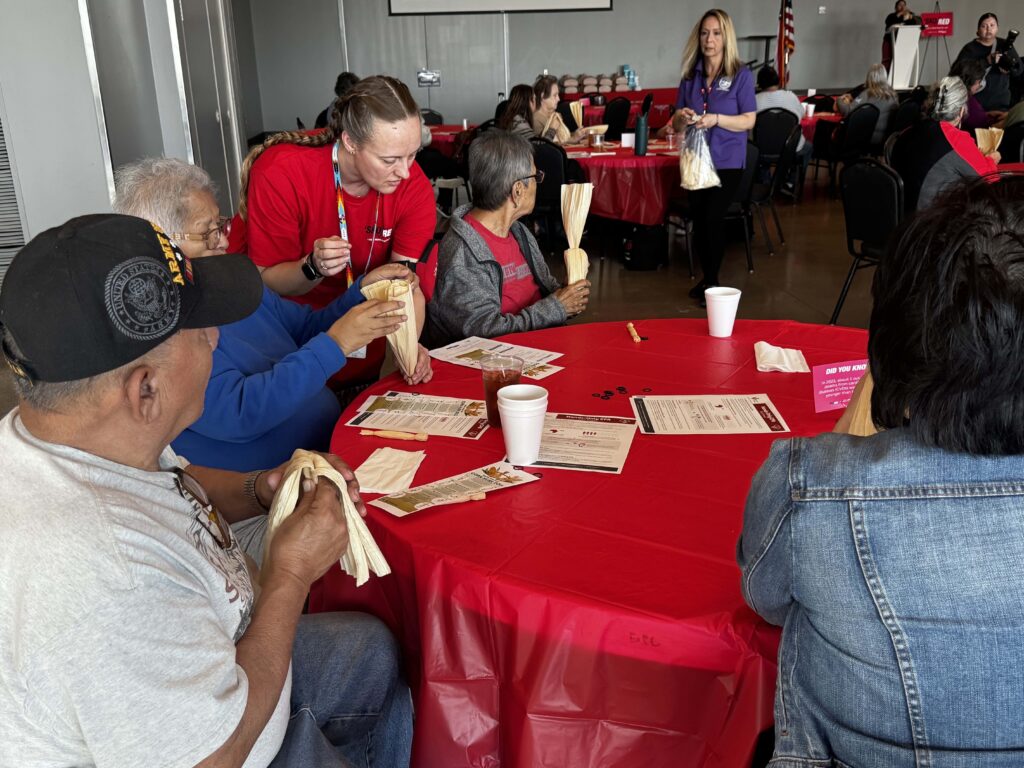
King believes this event is important for citizens, as a community, because it emphasizes taking care of one another and taking care of ourselves- some habits have been contributing to health issues.
“Especially our elders, we need to be able to get back to some of the things that we used to be doing that improve our health. Like we’re trying to do more with the College of the Muscogee Nation to help with gardening and stuff like that,” King said. “As a community, we need to be more active; we need to help each other. We need to go back to a lot of the way that our ancestors did.”
During the event, they also had a Walking for Life enrollment, an annual, incentive-based program that encourages the Native community to be more physically active year-round, as King stated. The Health Promotion and Wellness Team and the Public Health Nurses helped citizens enroll.
For King, the job is rewarding. “It’s a very good feeling, helping the community the way that I am able to, and getting feedback from so many people,” King said.