Byline: Fus Yvhikv
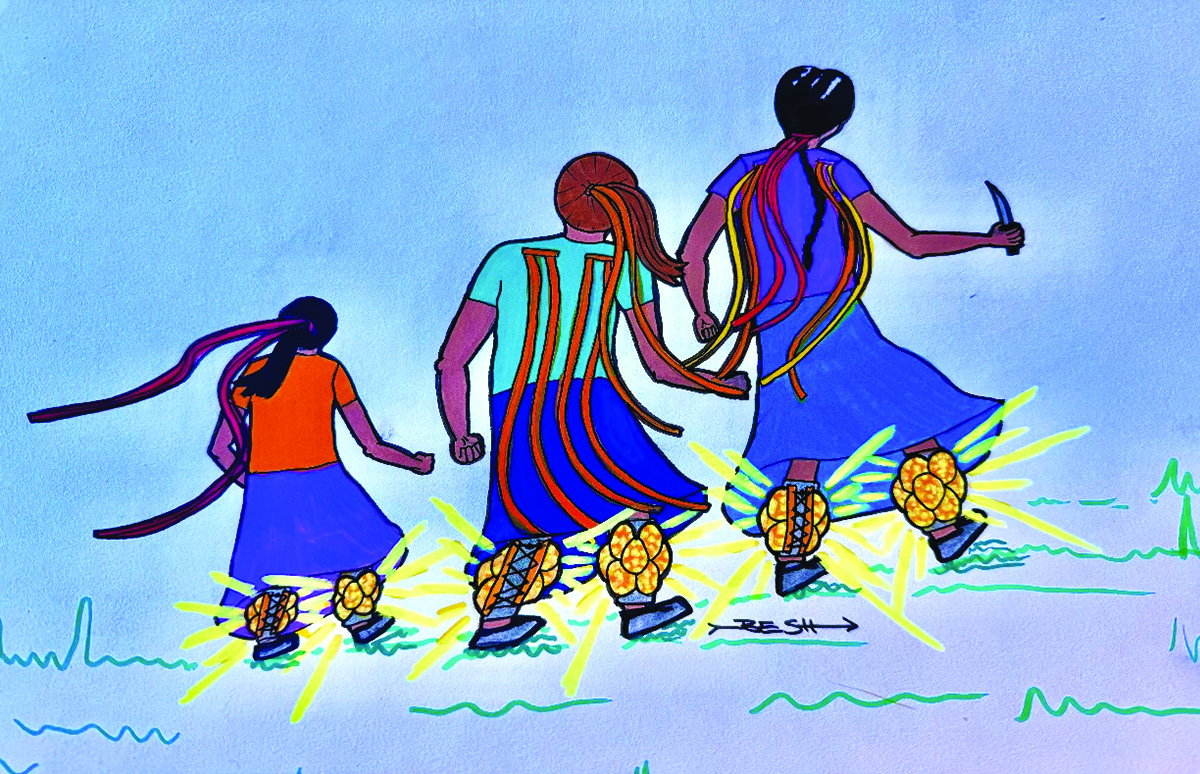
Locv! Locv! Locv! A bag of gold or my turtle shells? Imagine waking up in the middle of the night to find your whole house is on fire. A burning conflagration that is so intense the heat burns your skin, and you can barely breathe. You only have seconds to get out alive. You rush to the nearest exit, hurriedly grabbing your purse or wallet. As you approach the door you suddenly remember your fondest treasure; a 200-year-old family bible. You throw away your purse or wallet and frantically grab the bible as you escape to safety. In the crucible of such an emergency, when seconds matter, people have a propensity of risking their lives to save the one thing that matters most. It typically is not money or treasure but rather something that carries great personal meaning.
Such is the story of Mary Hutpa during the 1861 Trail of Blood on Ice. The narrative related in this article is largely based upon an interview of Joseph Bruner (Locv Pokv tribal town) by Effie Jackson on February 28, 1938. The interview can be found in the Indian Pioneer Papers on the website of the Oklahoma Historical Society. The Papers are a collection of oral histories conducted in the 1930s as part of the Works Progress Administration. The interviews offer firsthand accounts by elders of their lives in pre-Oklahoma statehood Indian Territory.
The bag of gold or turtle shells story takes place during the December 1861, Mvskoke Trail of Blood on Ice. During this time, several thousand pro-Union and neutral tribes people were fleeing Confederate controlled Indian Territory. They were desperately escaping to Kansas which was staunchly pro-Union. The refugees were led by the Upper Creek Chief Opothleyahola, then in his early eighties. Along the way, they were being pursued by Confederate troops commanded by Col. Douglass Cooper and Col. D.N. McIntosh.
Three well known battles were fought during the Trail of Blood on Ice. Those were The Battle of Round Mountain, November 19, 1861; the Battle of Chusto Talasah, December 9, 1861; and the Battle of Chustenahlah, December 26, 1861. It was at this second engagement, also known as the Battle of Bird Creek, where our story occurs. Here is the narrative as told by Joseph Bruner on February 28, 1938:
“After the Battle of Bird Creek, the mad flight north began. The women on horseback taking all the earthly possessions they could. I have heard my mother tell of that flight. To comprehend it you must bear in mind that Opothleyahola was taking all of his followers with him. Women, children, and even the aged and sick. It was almost another ‘Trail of Tears.’
“Kansas was to be their destination. In fact, Leroy, Kansas became their camp and home until after the war. Opothleyahola gave the Federal Government a thousand able-bodied men. Among them was my mother’s first husband, who was killed in battle.
“Mary Hutpa, a Kasihta [sic] an aunt of the present Mrs. Lizzie Sapulpa (widow of Jim Sapulpa) had been entrusted with a bag of gold belonging to Spocogee, leader of the Kashitas [sic]. Knowing that Mary was in the advance flight while he had to stay to fight, old Spocogee thought she would be able to save his bag of gold.
“The flight was sudden. In their fright the women threw away everything but their most prized possessions; their haste could not be encumbered with anything that seemed unnecessary. So Mary threw away the bag of gold and kept her precious turtle shells, for these were her main adornment in their tribal dances.
“When Spocogee found he had lost his gold they said he tried to swear in white man’s words, his anger was so great. As for Mary she made her turtle shell bands help her.”
This story always moves me because it manifests signature Mvskoke values and lifeways. Mary threw away the bag of gold and kept her precious turtle shells! The women shake shells at the ceremonial grounds not only to provide rhythm for the songs but also, fundamentally, to commune with Ohfvnkv, The One Above, or Creator. What could be more precious than that?
In our Western Society, we are taught to pursue riches, money, and gold. It is stories like Mary’s that connect us to our traditional Native ways and values. It is stories like Mary’s that remind us that our connection to Ohfvnkv and to Turtle Island are paramount. A bag of gold or my turtle shells? In a situation like Mary’s, may we all choose the turtle shells. Locv! Locv! Locv!
-Okis ci, Fus.