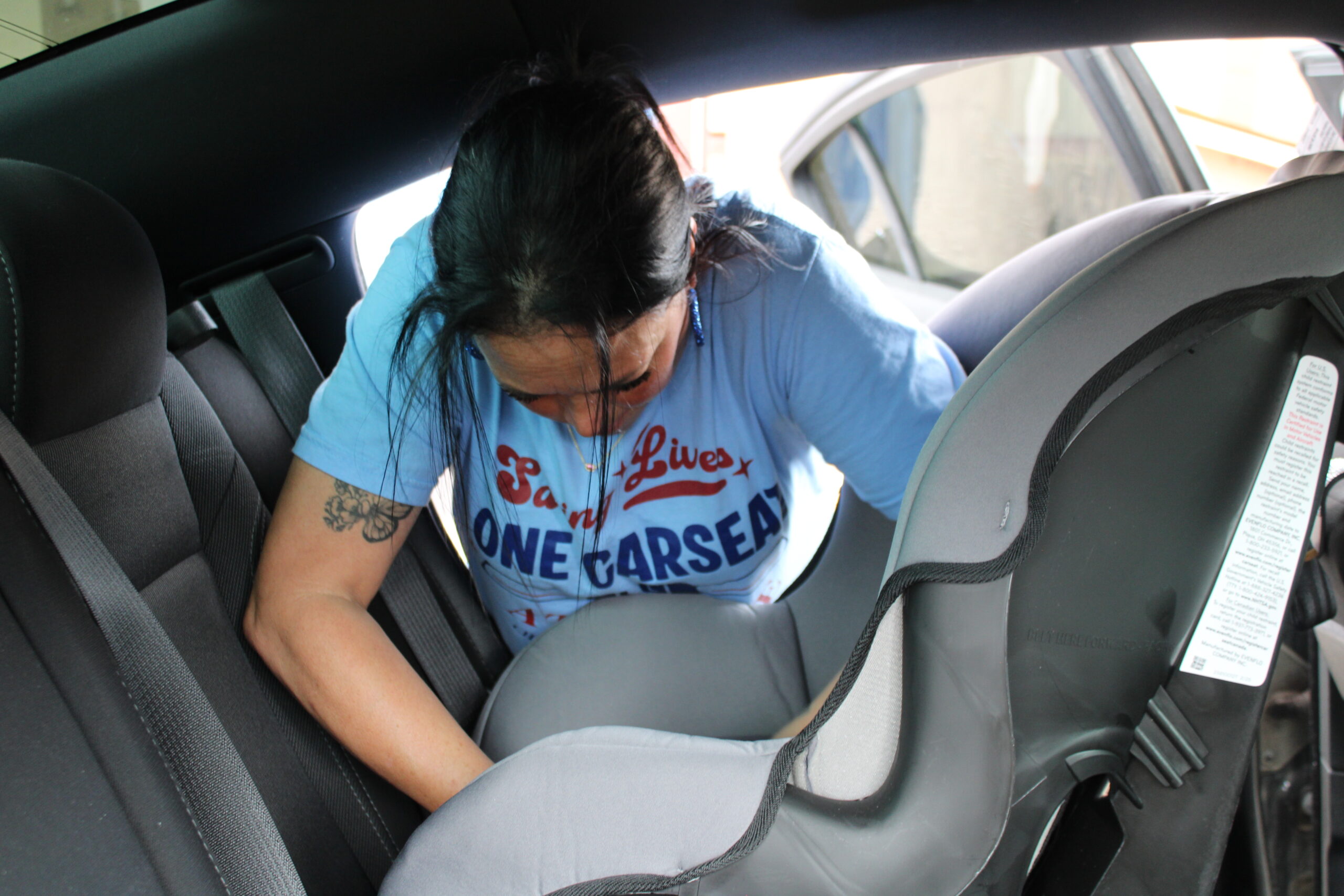
“It means a lot. Having twins is a lot financially. Now that I’m a stay-at-home mom it is a big struggle. Seeing that Creek Nation is out here to help citizens, it really means a lot, and it helps us. We are very much blessed.” Tamra Jimboy
OKMULGEE – Head Start Preschool Parent Family Community Engagement Specialist Tina Ward (Mvskoke) and her team of certified car seat technicians were hard at work on Tuesday, March 10, fastening seatbelts and anchoring down brand new car seats. The Head Start Preschool Car Seat Training Event distributed a total of 39 infant seats, convertible seats, and highback booster seats.
Each car seat was installed by one of the preschool’s certified car seat technicians. According to Ward, Head Start has distributed 250 car seats since 2024. The event is made possible by the U.S. Department of Transportation (DOT) Indian Highway Safety Program Occupant Protection Grant program, also known as the Child Passenger Safety Seat Program.
According to Ward, car seats are in high demand. A Joint Economic Committee Minority report from June 2025 states that common baby gear, such as car seats, cribs, and strollers, has increased by 24% due to tariffs on imports from foreign countries. In Oklahoma, the total increase in costs for new parents was $7.8 million.
“There are a lot of families that do not have car seats. They do cost quite a bit of money,” Ward said. “Based on the past year we’ve done this, we have seen an increase in price. The need’s always been there, especially with the economy.”
According to Consumer Reports, car seats can cost between $70 and $650. However, the most expensive car seat does not necessarily mean it is the safest. It is recommended that parents shop for car seats in person rather than online. Retailers like Amazon may offer a wide selection of models, but cushion angles and belt placement can sometimes make car seats incompatible with a given car make and model.
Tamra Jimboy (Mvskoke) was one of the parents who picked up a new car seat. She currently has two 11-month-old twins and a two-year-old. According to Jimboy, scheduling an appointment to install a new car seat was easy. She explained that the technicians were helpful and answered any questions she had about proper fastening.
“The manuals really help. I do go home, and I look over them in case we miss something if we have to take them out of the car. If the seats are loose, I always look at the manual to double-check and make sure everything is okay,” Jimboy said.
Car Seat Facts
According to the World Health Organization (WHO), car accidents are one of the leading causes of death for children in the United States. Car seats are legally required for children traveling in vehicles in all 50 states. They are designed based on a child’s age, weight, and height. Infant car seats are required by law to be rear-facing until the child is at least 2 years old.
According to the Oklahoma State Department of Health, there are four stages of car seats: rear-facing, forward-facing, booster, and just a seat belt. Rear-facing is legally required for children aged zero to two who weigh four to 35 pounds. Forward-facing is legally required for children aged two to four who weigh 40 to 50 pounds. Boosters are legally required for children aged four to nine who weigh 80 pounds or more. A child must be taller than four feet nine inches before they are ready to ride without a car seat. Ward explained it is best practice to keep children in their seat stage as long as they still fit within the height and weight range.
| Car Seat Type | Age | Weight |
| Rear Facing | 0-2 years old | 4-35 lbs |
| Forward Facing | 2-4 years old | 40-50 lbs |
| Boosters | 4-9 years old | 80 lbs+ |
| Car Seat | 10 years old+ | 80 lbs+/over 4’9 |
One of the most common problems parents may be unaware of is the expiration date of car seats. Most have a ten-year life span. Ward cautioned that parents who purchase car seats at garage sales or thrift stores should pay close attention to the product’s expiration date. These can be found on a sticker on the side of the car seat, with the date it was made and the date it expires. Used car seats that have been in car accidents, even minor fender benders, can affect their safety.
“Our overall goal is to make sure that our children, whether they are Head Start children or children out in the community, are protected. They are our future. We want to make sure they are kept safe,” Ward said.

According to Ward, another car seat training event will be scheduled later this year. A date has not yet been announced. Head Start car seat technicians can field any questions parents have regarding car seat installation. They can be reached at 918-732-7893.