SAN FRANCISCO – More than 12 years ago, Celine Sims depended on medical professionals to save her life. Today, the 13-year-old Muscogee (Creek) Nation citizen is using her experience to remind those same professionals of the people behind their research.
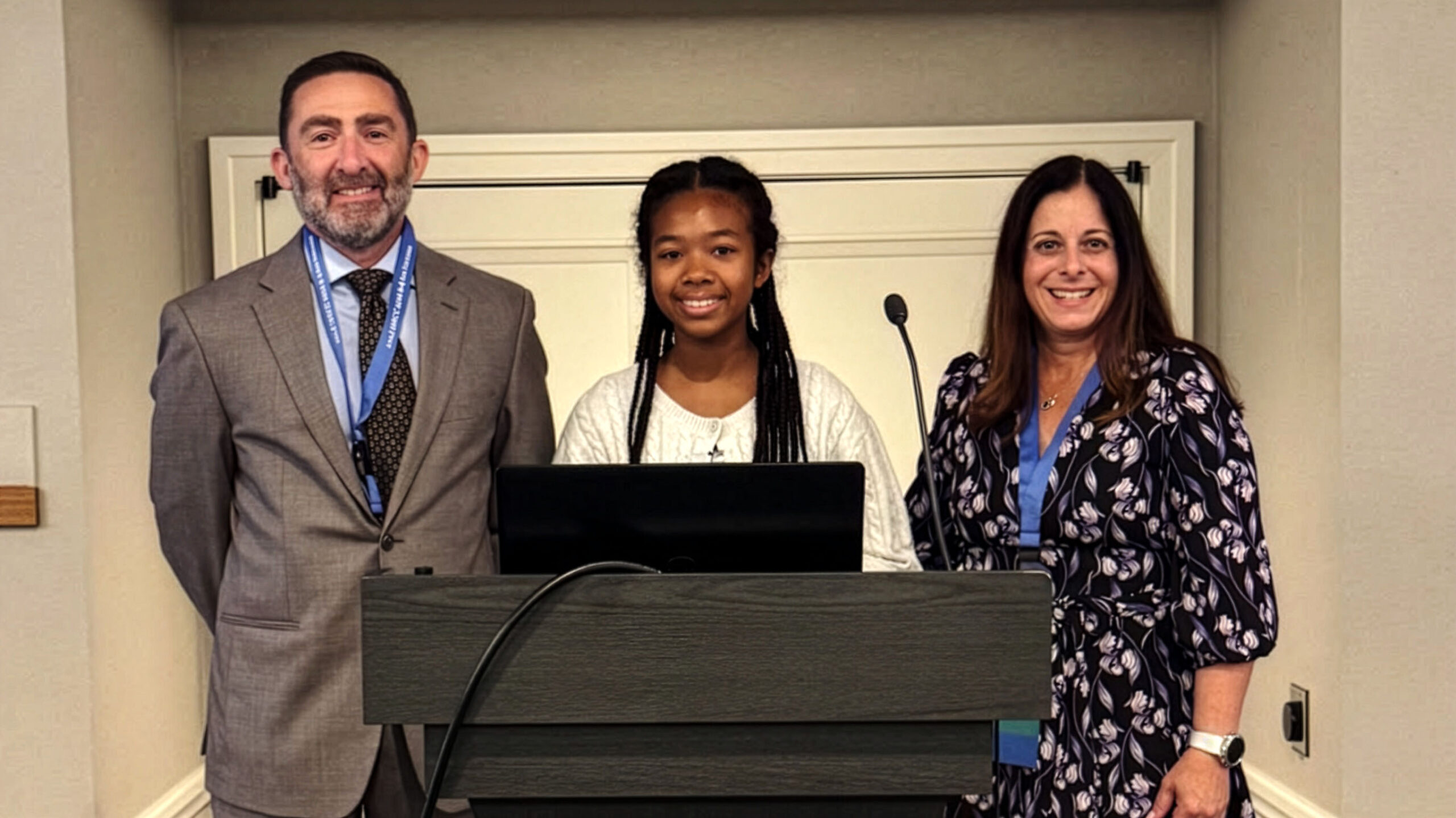
On Sept. 21, Celine delivered the opening keynote address at the 62nd Interagency Botulism Research Coordinating Committee meeting in San Francisco. The meeting, co-chaired by the California Department of Public Health and the U.S. Department of Agriculture, brought together doctors, scientists, and public health professionals working in botulism research.
Standing before the researchers, Celine shared her experience surviving infant botulism, a rare but serious illness that can cause muscle weakness, paralysis, and difficulty breathing.
Her message was simple: Behind every medical breakthrough is a patient and a family whose lives are affected by that work.
“The most important message that I wanted people to learn from my story was that because they work in a lab, like every day, and they don’t always see the impact they have,” Celine said. “So I really wanted them to understand that they impact on families through their work every day.”
When Celine was nine months old, her parents noticed something was wrong after a family outing in San Francisco. Their daughter was having difficulty lifting her head and rolling over, movements she had previously been able to perform.
By the following morning, her symptoms had worsened.
Her father, Diallo Sims, recalled the family seeking immediate medical attention. Their pediatrician, who had previously encountered cases of infant botulism, recognized the symptoms and helped facilitate an early diagnosis.
Celine was hospitalized at Stanford, where she received BabyBIG, a treatment for infant botulism supplied through the California Department of Public Health.
She spent approximately a month in the hospital, much of that time requiring a ventilator to help her breathe.
Although the treatment stopped the illness from progressing, her recovery was far from over.
After returning home, Celine underwent months of physical therapy to regain muscle coordination and developmental skills affected by the illness.
Diallo recalled celebrating milestones that many parents might otherwise take for granted, including his daughter lifting her head, rolling over, and beginning to move independently again.
“Everyone takes that for granted. That’s just normal. The curiosity of a baby,” Diallo said. “But when that’s taken away, it’s pretty life-changing.”
The experience left a lasting impression on the family.
Diallo, a middle school science teacher, said he approached much of the ordeal by focusing on the medical aspects of his daughter’s condition, while his wife carried much of the emotional burden of the hospitalization.
He said it took years for the family to reach a point where the experience was no longer something they thought about daily.
Although Celine was too young to remember her hospitalization, she grew up hearing about the experience from her parents.
It wasn’t until she was around 11 years old that she began to fully understand its significance.
“Even though I don’t remember everything that happened, it’s still, I was still super brave at the time,” Celine said. “So that gives me the bravery today.”
When representatives from the hospital invited her to speak at a research meeting, Celine saw an opportunity to thank the people whose work helped save her life.
Her family had previously declined opportunities to share their experience, but this time, Celine felt ready.
She wrote and revised her speech, practicing in front of her family until she was comfortable delivering it.
“I was really nervous because I wanted to get it right, but I was also excited for the opportunity to say thank you to all the people that helped me,” Celine said.
During the conference, she met researchers involved in botulism research, including someone who had studied a sample collected during her illness.
At the conclusion of her keynote, Celine received a standing ovation.
For Diallo, watching his daughter receive that recognition marked an emotional turning point.
“That’s when you knew that these researchers needed to see that part of their story,” he said.
He explained that many researchers spend their careers working with laboratory samples, medical data, and statistics without necessarily meeting the patients whose lives are affected by their work.
Seeing his daughter address them brought the family’s experience full circle.
Celine’s advocacy extends beyond the conference. Over the years, she has created artwork for hospital greeting cards, painted inspirational messages on stones, and raised money to support children receiving hospital care.
According to her father, she has also expressed interest in improving public awareness of botulism and supporting activities for hospitalized children.
Those experiences have helped shape her ambitions for the future.
“When I get older, I know I want to work in the medical field, like maybe a pediatrician or a doctor,” Celine said.
She hopes to provide the same compassion and care that helped her through her earliest months of life.
For other children facing serious illnesses, Celine has a message of encouragement.
“I want them to know that it does get better,” she said. “And there are like millions of kids just like you, so don’t feel like you’re alone.”
As a young Muscogee citizen, Celine said she is proud to represent her family and Nation as she shares her story with medical professionals.
Looking back on everything her family has experienced, she hopes her story encourages others to persevere through difficult circumstances.
When asked what she would tell her family 13 years ago, Celine offered a simple response.
“I would say to just keep going because it gets better later.”