
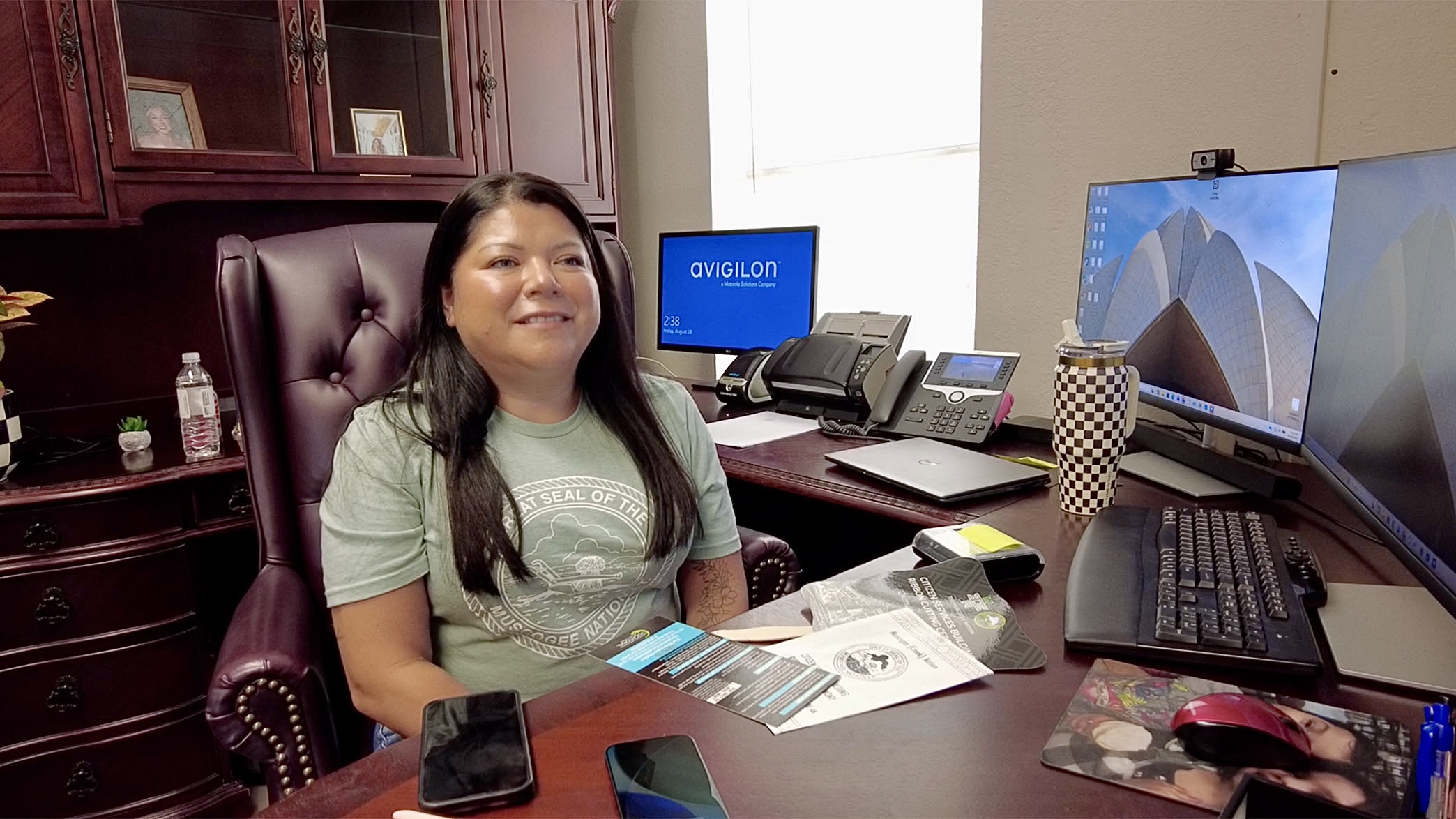
OKEMAH – The Muscogee (Creek) Nation Vocational Rehabilitation Program is working to help Indigenous people with disabilities overcome barriers to employment and find work that fits their individual needs and goals.
The program is designed to assist eligible individuals in preparing for, entering, and retaining suitable employment. Services are developed around each person’s needs and informed choices, according to the Muscogee Nation’s Vocational Rehabilitation website.
Ereca Camero, who began serving as the program’s director in July, said the program works with eligible citizens whose physical, mental, or learning disabilities interfere with their ability to work.
“The ultimate goal is for them to work or go back to school to learn a new trade in order to get back into the workforce,” Camero said.
Services are tailored to each client and can include transportation assistance, education and training, job-related resources, counseling and guidance, referrals to other agencies, and physical or restoration services.
Camero said job-related assistance can include necessities such as work clothes, scrubs, or shoes. The program can also help connect clients with cultural services when those needs are part of an individual’s plan.
The individualized approach means two clients with the same disability may receive different services based on their circumstances and employment goals.
“Someone might have diabetes as their disability, and the next person might have it as well,” Camero said. “But their services might not be the same due to their individualized needs.”
The process begins with a referral or application, followed by an intake interview and the collection of information needed to determine eligibility. Medical documentation from a physician is required to establish a documented disability.
Once a client is determined eligible, the client and staff develop an individualized plan for employment. The plan outlines the client’s employment goal, short and long-term objectives, and the services needed to reach that goal.
The program continues working with clients as they pursue employment and follows up for 90 days after they find a job to help ensure the employment is sustainable.
Camero said one misconception she hopes to address is that disabilities must be visible for someone to qualify for vocational rehabilitation services. Mental health conditions, including bipolar disorder, anxiety, and depression, can also interfere with a person’s ability to work.
“A lot of times people don’t think those are disabilities because it’s not a physical disability,” Camero said.
The program also works with students as they transition from high school into employment or further education. Services can begin as early as a student’s junior or senior year of high school. The program also serves veterans and individuals receiving SSI or SSDI who have an employment goal.
Camero said those unsure whether they qualify should still contact the program. Staff can help potential clients complete the application and, if someone does not qualify for VR services, may be able to connect them with another resource.
“Just taking the first step, just coming by the office, or calling us, or sending us an email. That’s the first step,” Camero said.
Those interested in learning whether they qualify for services can contact the Muscogee Nation Vocational Rehabilitation Program at 918-304-3366 or visit the program’s webpage.
For eligible Indigenous people with disabilities who want to work, the program offers a starting point for identifying barriers, building skills, and connecting with resources designed to help them reach their employment goals.



This article highlights the impactful work of the Muscogee Creek Nation Vocational Rehabilitation program in removing systemic and personal obstacles to employment for Tribal citizens with disabilities. Emphasizing tailored support, skills training, and holistic barrier reduction demonstrates how culturally grounded vocational assistance empowers individuals to achieve long-term career independence and community inclusion. Thank you for sharing such an encouraging and vital resource!