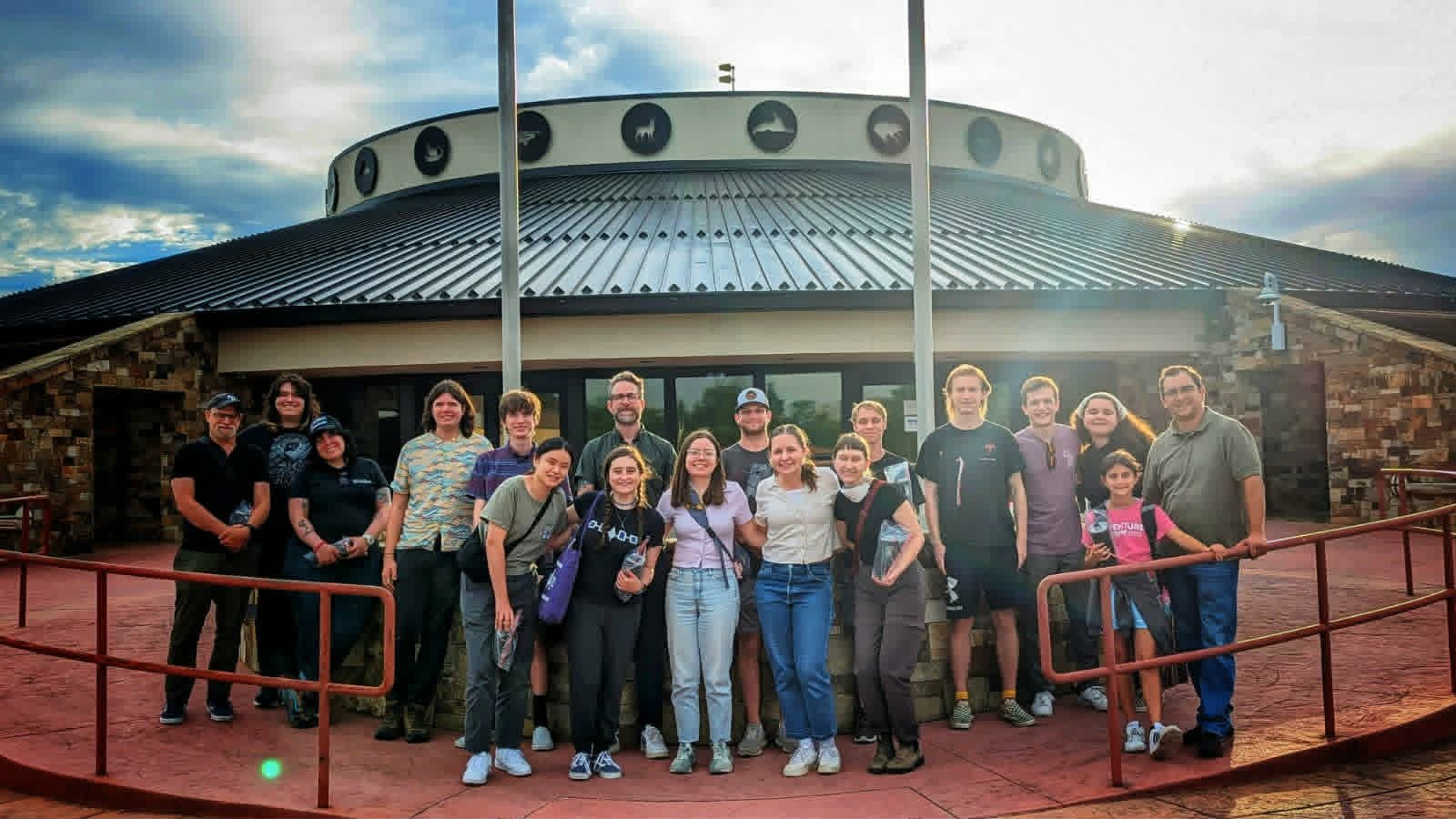
“I think that collaboration on archaeological work is important because it underscores Tribal sovereignty and the direct connection of Nations with the intellectual, spiritual, and artistic work of their ancestors,” – Victor Thompson
CAMBRIDGE – Researchers from the Muscogee (Creek) Nation, the University of Georgia, and the National Park Service collaborated on research involving carbon dating. The results were published in the article, “Collaborative Archaeology, Public Parks, and the Importance of Chronology at Ocmulgee Mounds National Historical Park” is featured in volume 91, issue 1 of the journal “American Antiquity” published by Cambridge University Press.
The research provides a chronological framework for the Ocmulgee Mounds National Historical Park, a traditional site of the Mvskokvlke. The project sought to uncover the history of communal areas, a chronology of migrations, and a chronology of site abandonment.
The authors conclude that the history of the Ocmulgee Mounds is complex and needs to be understood through the connection between the area and the present MCN. Ocmulgee still has a strong influence over the Tribe, as seen in its structures, such as the Mound Building and Council House.
To learn more about the history of the Ocmulgee Mounds, the article stresses that further research is necessary and must involve collaboration among researchers, the MCN, and Mvskoke descendants.
The Ocmulgee Mounds have endured over 12,000 years of human activity and are the ancestral homeland of the MCN before forced removal to Indian Territory. It saw conflict during the Civil War in the 1800s and is the site of the largest archaeological dig in American History in the 1930s. During the excavation, hundreds of thousands of Muskogean artifacts, including pottery, tools, and spears, were unearthed.
According to the article, researchers dated timber samples from the Earthlodge community building using a method called wiggle-matching. The technique provides a calendar date for archeological objects once used by humans. In this project, maize and carbonized wood were dated. According to the study’s data, wiggle-matching suggests that timbers from the Earthlodge were cut after AD 1160, indicating a later use of the site than previously thought. It also suggests that the occupation of the area was not short-lived and supports evidence for migration.
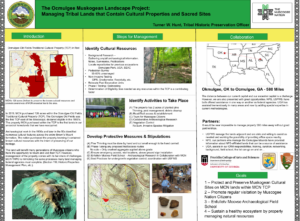
Collaborative Research
MCN Secretary of Culture and Humanities RaeLynn Butler and Mvskoke citizen Turner Hunt were among the scholars who collaborated on the article. Other authors include Victor D. Thompson, Jennifer Birch, Alex Cherkinsky, Carey Garland, Greg Golya, Carla Hadden, and J. Mark Williams. The article stresses that the research it presents would not have been possible without the collaboration of historians from the MCN. It states:
Consequently, the impetus and idea for this work originated from Muscogee Nation and not from the collaborating archaeologists. These collaborations, however, were born of us working together on a variety of other initiatives, including collaborative archaeology field schools and NAGPRA work (see Roberts Thompson et al. 2023).
Finally, as our new work demonstrates, the time for a more collaborative approach to research is at hand in the region, and it is becoming more widely practiced. This road has not always been easy, and many people have paved the way for the kind of collaborative work that we present here.
Thompson, who serves as the executive director for the Georgia Museum of Natural History, remarked that it was an honor to collaborate with the Nation on the research. He said working with Tribal historians opened his mind to new ways of thinking about the past. According to Thompson, collaboration between academic institutions and Tribes regarding ancestral homeland research needs to be valued and practiced.
“I do think that the future of archaeology is collaborative,” Thompson said in a statement to Mvskoke Media. “While collaborations start with individuals, the wave of the future will be its institutionalization with broader organizations, such as my own university. Such practices are important because as they become institutionalized, they allow us to normalize collaboration as a practice so that it becomes part of everyday archaeological thinking on the part of everyone.”
Butler defines collaborative research as a mutualistic relationship in which both parties benefit. Likewise, her department is seeking further opportunities to collaborate on research. According to Butler, the research on the Ocmulgee Mounds helps validate the Nation’s oral history of the region.
“Collaborative research means all participants benefit from the study. There is a long history of academic researchers conducting research on or about indigenous communities without their knowledge or support,” Butler said.
The inclusion of Mvskoke citizens throughout the project illustrates a way to strengthen the Tribe’s connection to the homelands.
“Many books and articles have been published on Mvskoke people and our history without our knowledge. We begin to attend academic conferences and meet researchers to break this cycle. We believe research is strengthened when our knowledge and voice are used as the primary source.”
Hunt has traveled to Macon on multiple occasions to provide tours, discussions, and classes on the Indigenous perspective of the homelands. Hunt and Thompson both agree that collaborative research should continue. He feels that collaborative archeology strengthens the field.
“Collaborative Archaeology gives a voice to people who have been historically disenfranchised by the discipline of archaeology. I view it as an opportunity to reframe the narrative of Muskogean history in our homelands. It is a better foundation for the discipline of archaeology than the previous versions that often left Native voices out.” Hunt said.
Butler said her department has reviewed more than 50 research projects and will continue to collaborate on archaeological projects in the homelands. Butler argues that increased collaboration broadens access to collections of Muskogean artifacts.
“When we participate in the research, we reestablish our connection to our ancestors and strong ties to the present,” Butler said. “Many times, you hear archaeologists refer to the indigenous peoples they study by names like, ‘the Ocmulgee people’ or ‘the Lamar people’ or ‘Mississippians’ and then saying they went extinct.”
“We are still here; we obviously are not extinct.”