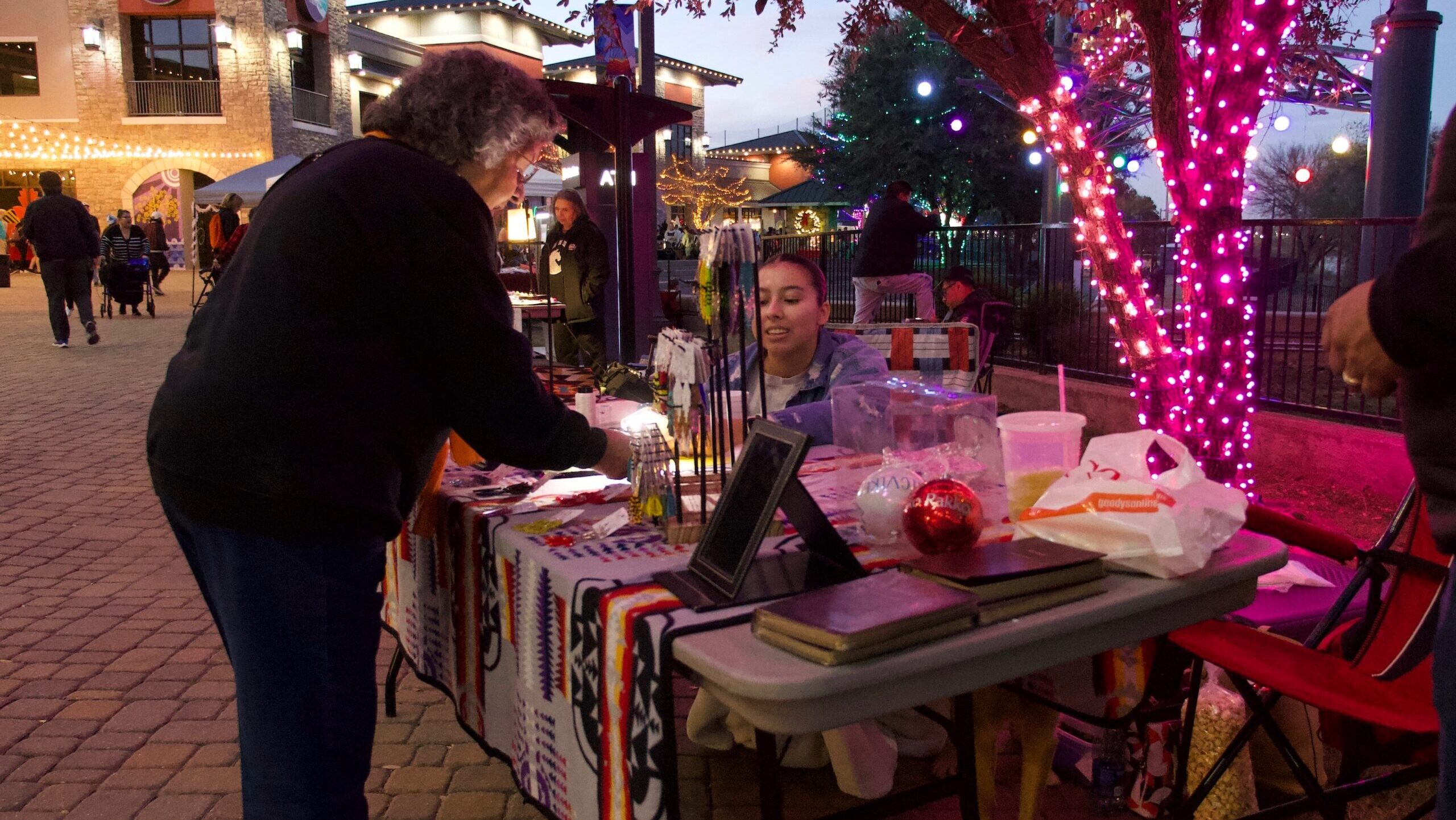
OKLAHOMA — With the holidays right around the corner, there is no better time to check out some of Native America’s finest artisans on the Mvskoke Reservation and across the state.
Shopping for handmade items from Indigenous artists and makers keeps revenue within their communities while preserving Native American art forms by sustaining demand for their work.
Native American Christmas markets make it easy to shop local artisans’ wares by bringing dozens, if not hundreds, of craftspeople together under one roof. From baby blankets to intricate beadwork, there is something for everyone.
Some upcoming Native holiday markets include:
- Seminole Nation Museum Holiday Bazaar in Wewoka, which runs from 8 a.m. to 4 p.m. on Nov. 20.
- Native Christmas Market in Jenks, which runs from 1 p.m. to 7 p.m. on Nov. 21.
- Muscogee Nation Christmas at the Dome, which runs from 10 a.m. to 3 p.m. on Dec. 5.
- Native American Christmas Market in Glenpool, which runs from 8 a.m. to 6 p.m. on Dec. 12. Admission to the market is $5.
The Native Christmas Market on the Jenks Riverwalk is hosted by the Muscogee (Creek) Nation. According to a Facebook post from the MCN, the market is switching things up this year by increasing the number of allowed booths to create more variety. There will also be live music at the event from 3 p.m. to 6 p.m.
MCN Christmas at the Dome is a brand new event celebrating its first year of festivities. The event will feature Mvskoke vendors, photos with Santa, giveaways, and more. Admission is free.
The markets feature handmade items like leather goods, ribbon skirts and other textiles, beadwork, paintings, jewelry, and more. Shoppers can also keep an eye out for Pendleton products as well.
For those who can’t make it to in-person markets, there are some options online for shopping Native-made goods, but buyer beware.
Etsy is a popular online marketplace that prides itself on being a one-stop shop for unique, handmade goods. However, shopping on Etsy comes with the risk of buying inauthentic goods under the guise of Native-made.
Currently, Etsy has no safeguards in place to protect buyers from sellers posing as Natives and selling fake Native-made goods. Instead, the platform relies on the Indian Arts and Crafts Act to shift liability onto sellers rather than taking direct action.
While it is illegal to sell items labeled or advertised as authentic and Native American-made when they aren’t, some sellers have gotten creative, skirting the law by labeling their items as “Native American-inspired.” These sellers may also forgo making any claims, but will still copy the style and materials traditionally used by Native artisans.
Shoppers can also find Native-made goods on Facebook Marketplace, but should take the same precautions as with Etsy and other websites. Facebook Marketplace, when used with caution, can be an easy way to connect directly with Native artisans.
Online resources, such as a list compiled by the Partnership with Native Americans, can help direct shoppers to authentic goods, Native-owned businesses, and Native artisans.
Some local brick-and-mortar shops with authentic goods include Southwest Trading Company in Tulsa, INDIGICHIC by Native Fashion Arts Collective LLC in Tulsa, and Supernaw’s Oklahoma Indian Supply in Skiatook. Tribal Nations often have their own shops or museums that sell goods as well.