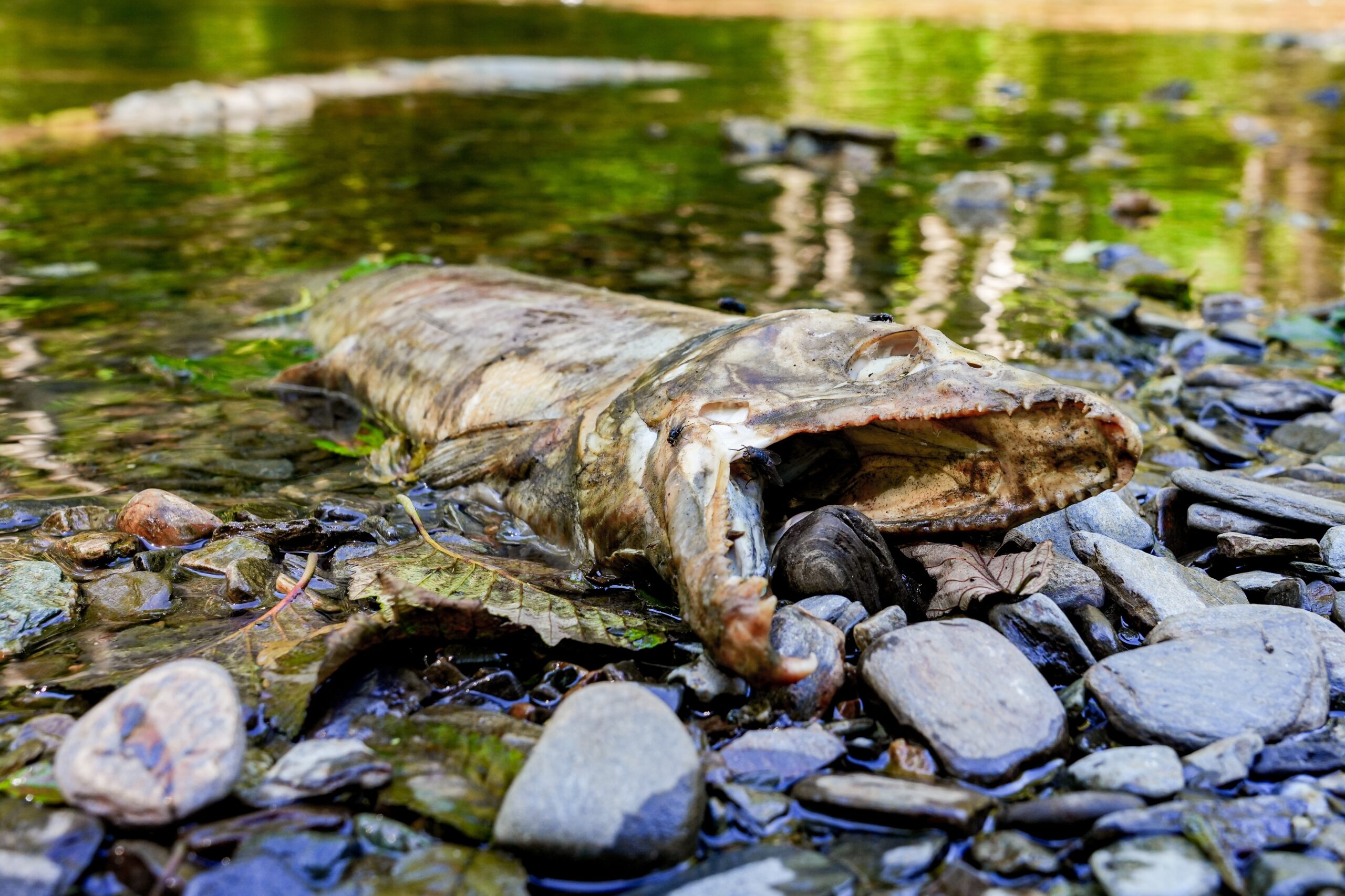
LA CONNER, Wash. – The Swinomish Indian Tribal Community and the Squaxin Island Tribe are suing the Trump Administration over the rescission of the term “harm” under the Endangered Species Act (ESA) announced on Friday, July 10. The change removes the term “habitat destruction” from the law’s protections for threatened and endangered wildlife. According to a press statement released on Tuesday, July 14, the Tribes are seeking to protect the Chinook Salmon and the Southern Resident Killer Whale, species that hold cultural significance.
The Trump Administration ordered the rescission of the definition of “harm” in March 2025. In response, the Swinomish Tribe submitted a 20,000-page report detailing how habitat degradation and destruction are the leading causes of species loss. That report cited 318 peer-reviewed studies. Tandy Wilbur serves on the Swinomish Senate and works as a Fisheries Manager. He believes the changes will have devastating cultural impacts on the Tribe.
“We submitted thousands of pages of best science that show how unjustified it is to suddenly remove key regulations that protect the habitats that ESA-listed salmon need to recover. This rule will worsen salmon habitat conditions and without question that will reduce salmon stocks. Because salmon is both food and spiritual nourishment for Swinomish Community members, I fear for the health of our people and our cultural lifeways,” Wilbur said.
ESA has been law since its passage in 1973. It provides a program for threatened and endangered plants and animals, as well as the habitats where they are found. The act requires federal agencies to consult with the U.S. Fish and Wildlife Service (FWS) to ensure that no actions jeopardize endangered species. It is illegal to import or export endangered species.
Preventing “harm” to endangered species means preventing the destruction or degradation of their habitat. Including the loss of wetlands, grasslands, and other natural areas necessary to survive. This was upheld by the U.S. Supreme Court in the 1995 case, Babbitt v. Sweet Home Chapter of Communities for a Great Oregon. That decision stated that it is unlawful for a citizen to “take.” The legal term “take” is defined as harassing, harming, pursuing, or killing endangered or threatened species.
Joe Peters (Squaxin Island Tribe) serves as a Squaxin Island Tribe Senior Natural Resources Policy Representative and a Harvest Manager. Peters explained that protecting culture and habitats go hand in hand.
“As descendants of the maritime people who have fished along the shores of the southern inlets of the Salish Sea for thousands of years, the Squaxin people know that habitat protection and restoration is essential to species recovery,” Peters said.
“We are invested in consistent and robust enforcement of the Endangered Species Act, which must include protection of habitat in order to effectively safeguard Treaty resources such as salmon, instream flows, and water quality.”
“Whooping Cranes are living proof that the Endangered Species Act works. This species was on the very brink of extinction — down to just a handful of birds — when the ESA became law. It is the protection of habitat, as much as protection of the birds themselves, that has allowed the population to grow from fewer than 50 to more than 500 today.” – Dr. Rich Beilfuss
ESA impacts on Oklahoma
The changes are also affecting endangered species in Oklahoma, such as the whooping crane. According to the National Crane Foundation, ESA is credited with saving the whooping crane population, which had an estimated 50 birds in 1973. That population now has over 500 birds in the wild. According to International Crane Foundation President and Chief Executive Officer Dr. Rich Beilfuss, removing federal protections will undo decades of progress in helping vulnerable avian populations.
“We are deeply concerned that this rule strips away a tool that has been essential not only to the Whooping Crane’s recovery, but to the recovery of hundreds of other species across the country,” Beilfuss said. “The International Crane Foundation will continue to stand with the scientific and conservation community in defense of the habitat protections that make species recovery possible, and we urge decision-makers to reconsider a rule that threatens fifty years of hard-won progress.”
The U.S. Department of the Interior described the revisions as “necessary” to strengthen energy independence. Secretary of the Interior Doug Burgum argued that the change in the law will not affect the species listed as endangered or threatened.
“For too long, the Endangered Species Act has been weaponized to stop almost any new project in America, driving up costs for families, weakening our competitiveness, and undermining our national security,” Burgum said. “At the same time, results have fallen short. Nearly 97 percent of species ever placed on the list remain there today. Success should be measured by species recovery and delisting, not by adding more species to the list.”
To view a full list of endangered or threatened species in Oklahoma, including the Ozark big-eared bat, the Oklahoma Cave Crawfish, and the American Burying Beetle, go here.