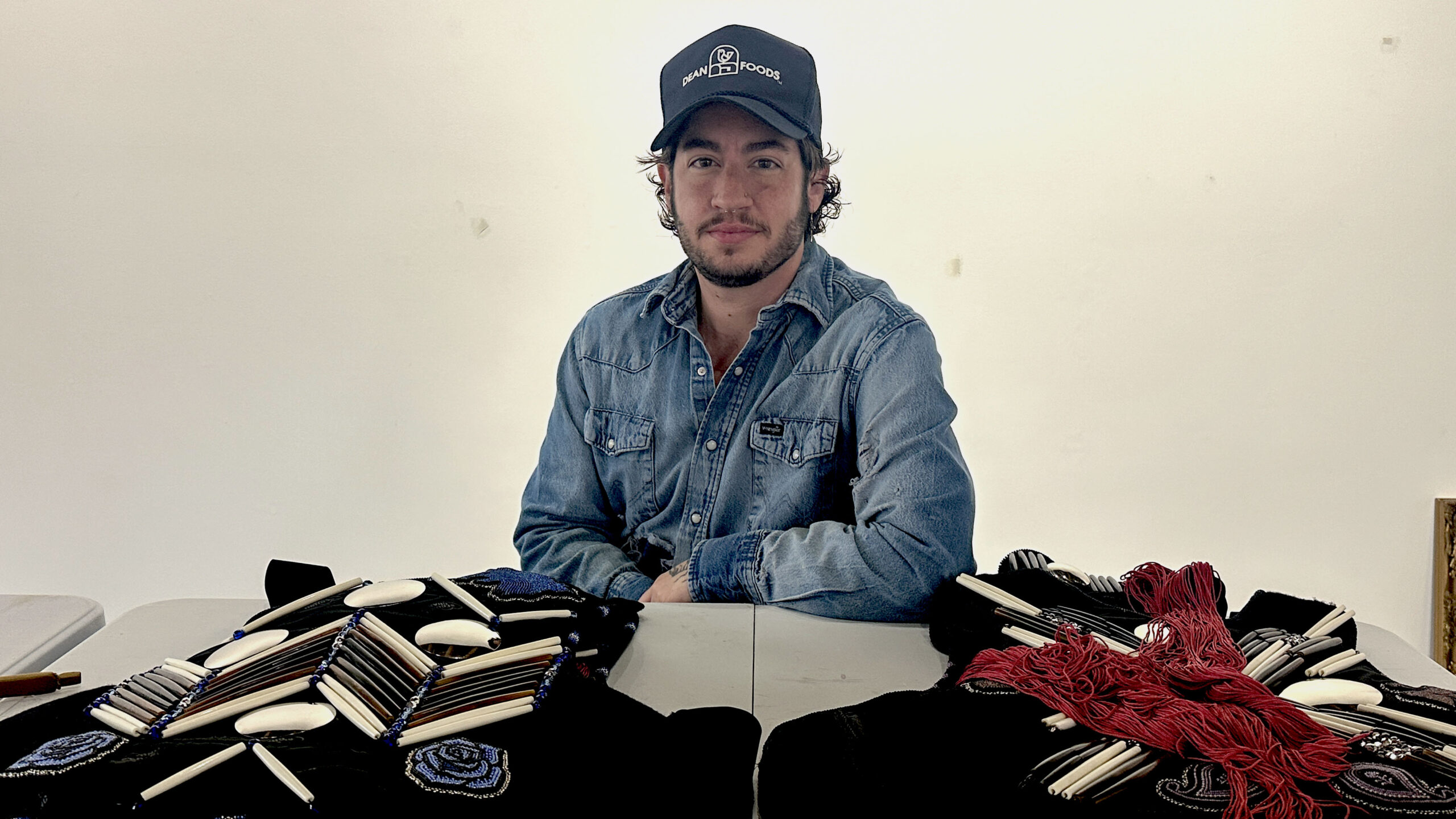
TULSA – What does it mean to be strong? For generations, Western ideals of masculinity have emphasized dominance, emotional restraint, and independence. But an exhibition that opened Saturday, Nov. 7 at Positive Space Tulsa invites visitors to consider a different understanding of strength – one rooted in vulnerability, relationships, and responsibility to others.
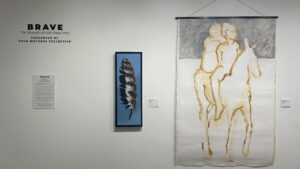
Brave: The Strength of Soft Masculinity, presented by Four Mothers Collective and curated by Cherokee Nation citizen Hank Cooper, explores masculinity through the cultural lens of Southeastern tribal matrilineal societies, challenging conventional expectations of gender and identity.
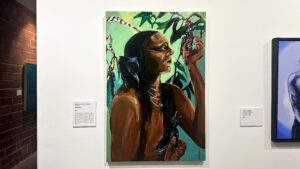
The exhibition, which will remain on display through Dec. 12, features the work of 15 artists whose perspectives examine masculinity, gender expression, family relationships, and connections to ancestry.
Cooper said the exhibition grew partly from his own experiences navigating masculinity as a queer, transmasculine person.
After spending years living in cities such as Seattle, Albuquerque, and Santa Fe, Cooper returned to Tulsa three years ago. The move prompted him to reconsider how others perceived him as a man and the expectations that came with that identity.
“It definitely had me thinking about the things I signed up for, the parts of masculinity I signed up for and the parts of masculinity I didn’t,” Cooper said.
Those experiences helped shape their vision for an exhibition that challenges the idea that masculinity must be defined by rigid expectations.
Cooper said they hope to encourage a more expansive understanding of masculinity, particularly through the traditions and cultural frameworks of indigenous communities.
The exhibition draws inspiration from Southeastern tribal matrilineal societies, where relationships, kinship, and responsibilities to the greater community offer a lens for examining gender roles.
Rather than attempting to establish a single definition of masculinity, Cooper hopes visitors will question why such definitions are necessary in the first place.
“I think that’s the problem is that defining it puts these restrictions around it and doesn’t allow it to evolve and, and be something different and be something more beautiful and be something more embraced,” Cooper said.
Cooper worked alongside Carly Treece (Mvskoke) of Four Mothers Collective to bring together artists representing different tribal communities, generations, and gender expressions.
The resulting collection includes two- and three-dimensional works exploring fatherhood, relationships between brothers and uncles, gender expression through clothing, and personal communications with ancestors.
For Cooper, the variety of perspectives is central to the exhibition’s message. Rather than presenting a single interpretation of masculinity, the artwork invites consideration of how identity and cultural responsibility intersect.
Despite its examination of patriarchal systems and gender expectations, Cooper emphasized that the exhibition is not intended as a criticism of men.
“This is definitely not a man-hating exhibition, you know, like it’s actually quite the opposite,” Cooper said.
Instead, he described the exhibition as a call for communities to consider how they can collectively address harmful expectations while creating room for vulnerability and connection.
For Nicole Finley, founder and director of Positive Space Tulsa, providing opportunities for those conversations aligns with the gallery’s mission.
Finley established Positive Space in 2020 as a dedicated space for women artists, embracing an expansive understanding of gender identity. Since then, the gallery has collaborated with artists and organizations to showcase work that addresses subjects that might otherwise go unspoken.
Her partnership with Four Mothers Collective began around 2023, when Treece approached her about organizing a group exhibition.
Finley said the collective’s exhibitions have consistently addressed meaningful issues with Indigenous communities, including previous work examining missing and murdered Indigenous people.
She hopes Brave encourages artists and visitors alike to approach difficult conversations with openness, recognizing that others may share similar experiences and questions.
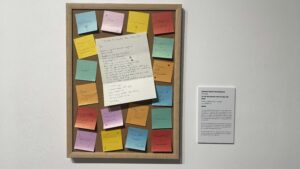
Beyond the artwork, the exhibition offers opportunities for community engagement, including an Open Mic & Community Nite on Nov. 21 and the Brave Makers Market on Nov. 28.
Cooper hopes visitors leave with a greater appreciation for the masculine figures in their lives and a willingness to reconsider how they understand and support them.
Rather than prescribing what masculinity should look like, Brave invites visitors to imagine what it could become when strength is measured not by dominance, but by the ability to care, connect, and grow.
Brave: The Strength of Soft Masculinity opened Saturday, Nov. 7, and remains on display at Positive Space Tulsa through Dec. 12. An Open Mic & Community Nite is scheduled for Nov. 21 from 6-8:30 p.m., followed by the Brave Makers Market on Nov. 28 from noon-4 p.m. Gallery hours are Thursdays from 6-8 p.m., Fridays from 5-8 p.m., and Saturdays from noon-5 p.m., or by appointment. Additional information is available at https://linktr.ee/positivespacetulsa.