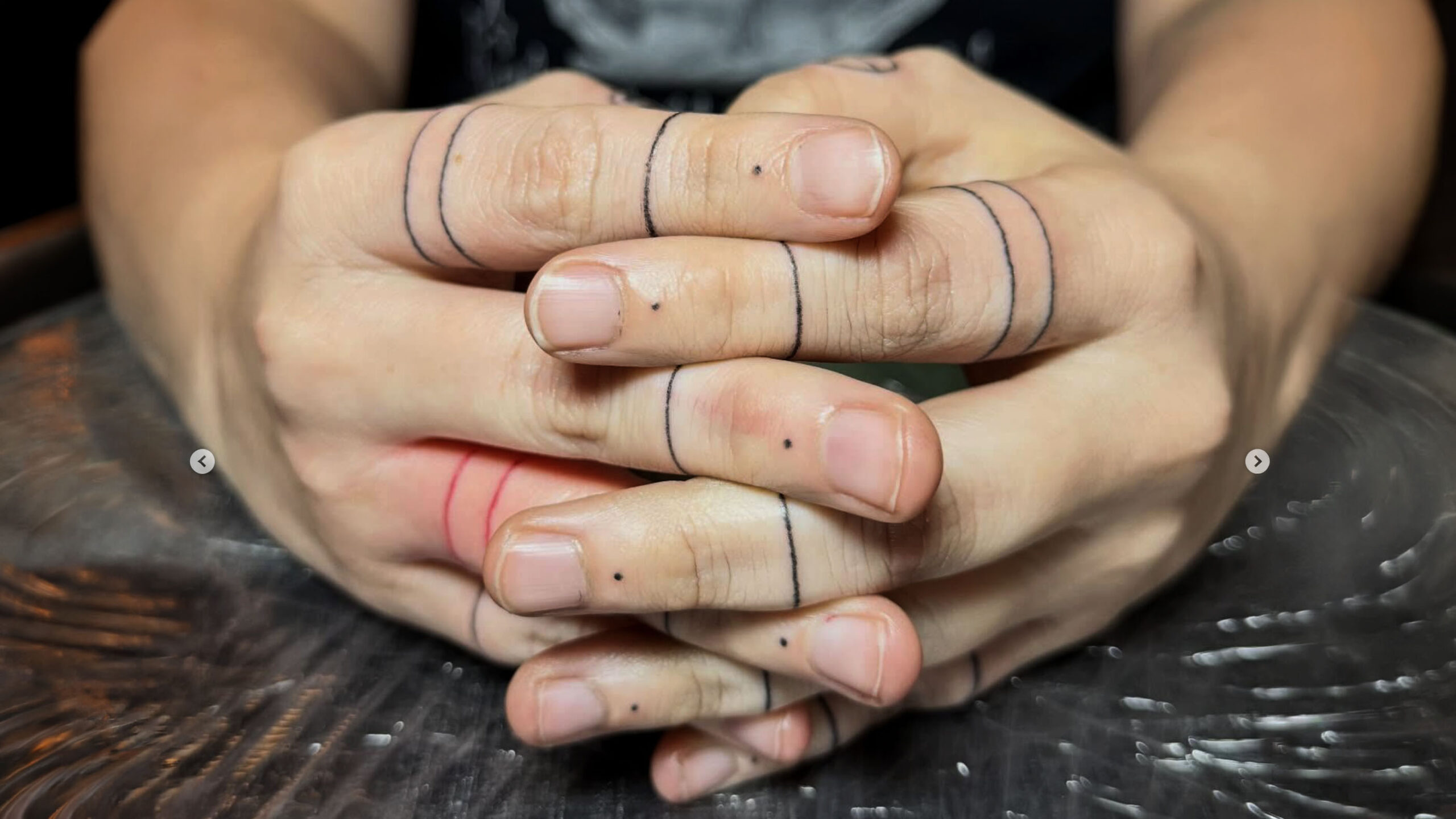
MVSKOKE RESERVATION – When tattoo artist Missy Mahan opened a book and discovered an illustration of traditional Yuchi tattooing, she was surprised to find a piece of her own cultural history staring back at her.
Mahan, a Muscogee (Creek) Nation citizen with ancestral ties to the Tohono O’odham and Yuchi nations, had grown up surrounded by tattoo traditions on her maternal side. Facial markings and dotwork were familiar sights among the women and elders in her community. However, she had never known that tattooing was also a significant practice among her Yuchi ancestors.
“I had no idea we practiced tattooing, and we were heavily tattooed, both men and women,” Mahan said.
That discovery sent her searching for more information, examining historical illustrations, speaking with elders, and seeking knowledge that had become increasingly difficult to find.
For Mahan and other Indigenous tattoo artists, the renewed interest in ancestral markings represents more than an artistic movement. It is an effort to reclaim cultural practices disrupted by generations of colonization and suppression, while preserving their significance for future generations.
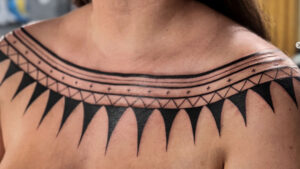
Mahan has been tattooing for nearly 14 years, but her exploration of Southeastern tattoo traditions began within the past several years.
Through her research, she discovered historical accounts and illustrations depicting distinctive Yuchi markings, including chest and neck tattoos among men and turkey-track designs extending along women’s arms. Some historical markings have been associated with warriors, leadership, or community status, although Mahan said the meanings and circumstances surrounding many designs remain uncertain.
For her, recovering those stories is just as important as recovering the designs themselves.
“I definitely would like to get that information from our own voice, from our own community,” Mahan said.
While historical records offer glimpses into ancestral practices, Mahan said conversations with elders and community knowledge keepers can provide context that written documentation may not preserve. The gaps in that knowledge also raise questions about how artists should approach revitalization. Rather than directly reproducing historical markings, Mahan works with recipients to create individualized designs inspired by their ancestral traditions.
“I don’t want to take a direct design from a book or an image,” she said.
The process allows recipients to honor their heritage while creating something meaningful to their own lives.
For Kii Johnson, a Two-Spirit Mvskoke and Cheyenne-Arapaho tattoo artist based in Tulsa, ancestral marking is as much about intention and responsibility as it is about the finished design.
Kii began tattooing through hand-poke techniques before entering the professional tattoo industry. What initially served as a personal outlet for healing eventually became a way to connect more deeply with their Indigenous identity. They now distinguish between contemporary tattooing and ancestral marking through the preparation, relationships, and ceremonial elements involved.
While a contemporary tattoo may begin with a discussion of design and budget, Kii’s ancestral marking process involved extended conversations about the recipient’s family, experiences, and reasons for seeking the marking.
The process may also incorporate prayer or the burning of medicine. Kii typically uses hand-poke techniques for ancestral markings and accepts gifts, such as blankets, food, or beadwork, rather than monetary payment.
“I think that getting to know someone and getting to help them know themselves more through tattooing has been a motivation,” Kii said.
Both artists describe tattooing as a form of medicine, emphasizing its spiritual, emotional, and cultural significance.
For Kii, however, revitalization also carries an obligation to protect the practices being restored.
They said their approach has evolved as they have gained experience, placing greater emphasis on building relationships with recipients and understanding when an ancestral marking may not be appropriate.
Without a complete record of historical practices, contemporary artists must navigate questions of cultural responsibility while determining how to honor ancestral knowledge.
“Not having as much information can be really difficult to navigate,” Kii said.
That responsibility sometimes means telling someone they are not ready to receive a marking or recognizing that another practitioner may be better suited to guide them.
Beyond their work with ancestral markings, Kii emphasizes creating welcoming environments for Indigenous and queer people seeking tattoos. As a Two-Spirit artist, they understand how personal identity can influence the experience of receiving permanent artwork.
Kii said finding spaces where they felt understood was not always easy, and they hope to offer that sense of belonging to others.
“If there isn’t one, then you just have to be the one to make it,” Kii said.
For some clients, working with an Indigenous artist provides an opportunity to connect with someone who understands the cultural significance behind a design. For others, finding an artist who shares or respects their experiences can make an otherwise vulnerable process feel more comfortable.
Kii believes greater representation of Indigenous, queer, and Two-Spirit artists is essential to changing an industry they describe as historically male-dominated and difficult to enter. Their work reflects another dimension of tattoo revitalization: creating opportunities for Indigenous people to express their identities on their own terms.
That growing community was on display during the “Gathering of Ink” tattoo convention in Oklahoma City, organized by Mahan.
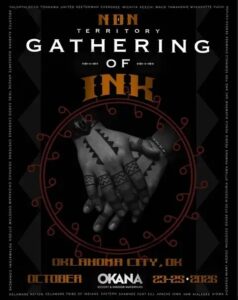
After previously helping organize Indigenous tattoo conventions, Mahan wanted to bring a gathering of artists to Oklahoma, where her paternal family has roots. The event brought Indigenous tattoo artists and other creators together to share their work, exchange knowledge, and connect with people interested in contemporary tattoos and ancestral markings.
Kii, who attended the gathering, described the experience of being surrounded by other Indigenous tattoo practitioners as particularly meaningful.
They recalled watching a friend receive chin markings at the convention, an experience that challenged their expectations about where ancestral marking ceremonies could take place.
Although the marking took place in a crowded event center, Kii said the experience demonstrated how traditional practices can take different forms in contemporary settings while retaining their personal and cultural significance.
For Mahan, the positive response reinforced the importance of creating spaces where Indigenous artists can share their knowledge and communities can reconnect with tattoo traditions.
As interest in ancestral tattooing grows, both artists hope future generations will have greater access to the knowledge and cultural guidance needed to continue these practices.
Mahan said she has witnessed younger Indigenous people seeking ancestral markings, researching their histories and participating in discussions about cultural protocols.
Still, many questions remain about historical designs, their meanings and the circumstances in which they were traditionally worn. For Mahan, preserving those stories is as important as preserving other elements of Indigenous culture.
“I think it’s just as important as preserving our language and our foodways and our song and dance,” she said.
She hopes continued research and conversations with elders will help recover knowledge that future generations can carry forward.
And while some may view the growing visibility of Indigenous tattoos as a passing trend, Mahan sees something far more enduring.
“It’s a revitalization. It’s our lineage. That’s our identity,” she said.