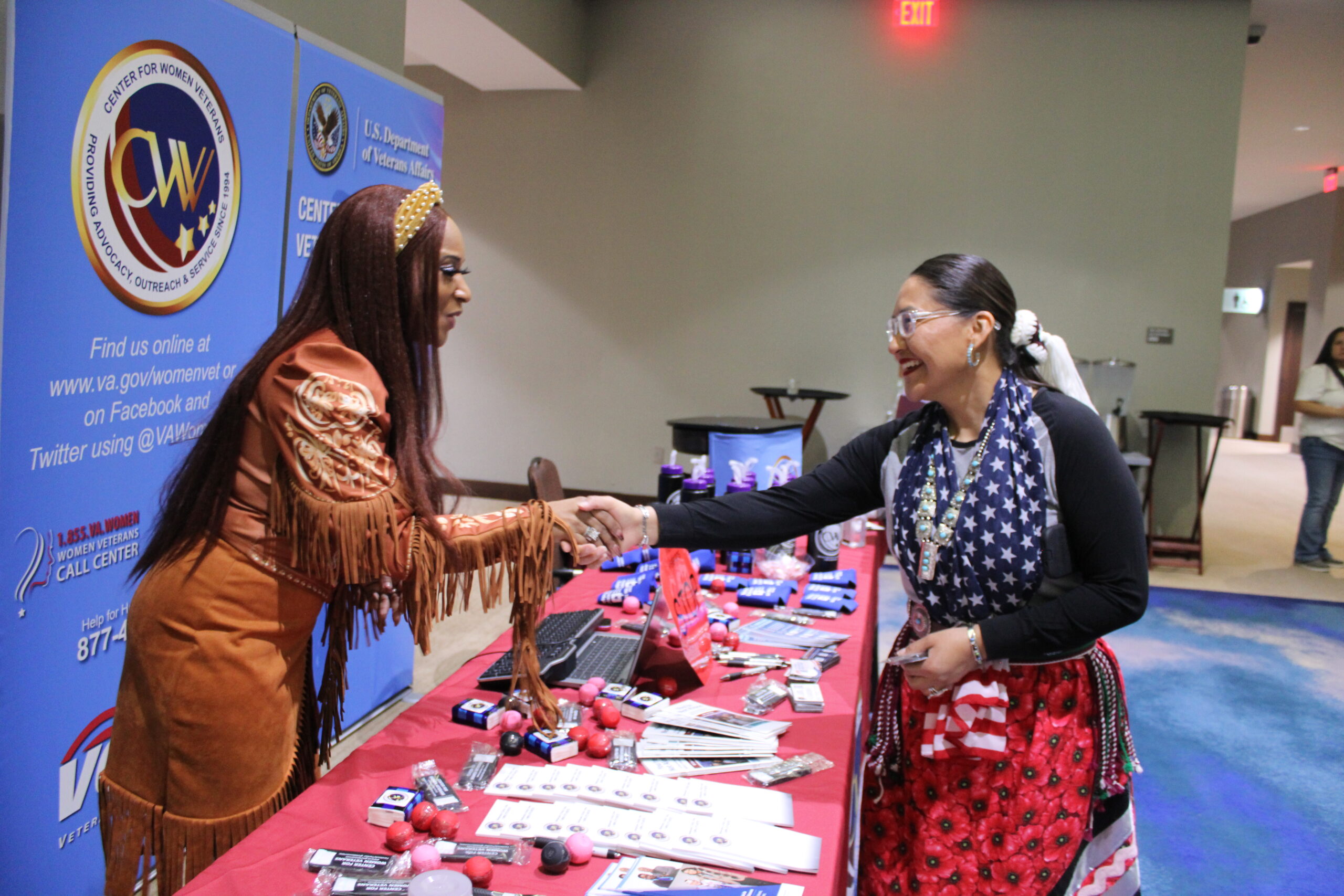
TULSA – Native American women veterans were celebrated for their service at the 2026 Tribal Women Veterans Summit on Thursday, April 2. The all-day event was held at the River Spirit Casino and featured a resource booth fair, panels, and a fashion show. Items on the day’s agenda included how to connect with veteran affairs resources, legal aid, and self-care practices. In opening statements, Tribal leaders noted that the annual summit is important because it provides an opportunity to celebrate a specific group of veterans who are often not recognized for their service.
“It’s always nice to see women. When I go home, we’re not always acknowledged. It’s really encouraging for me.” – LaRue Guoladdle
U.S. Department of Veterans Affairs Tribal Government Relations Specialist Mary Culley is an enrolled Seminole Nation citizen and has Mvskoke heritage. A veteran herself, she served 20 years in the Air Force. Her department works closely with VA offices, including Muscogee Nation VASO. According to Culley, her department cohosts the summit because they are familiar with the issue of Native American women veterans not receiving the benefits and services they are entitled to.
“They’re often left out of the picture,” Culley said. “This particular event we’ve done for the past three or four years gives these women their own voice. It allows them to tell their own story in their own way.”
Muscogee (Creek) Nation Principal Chief David Hill said the annual event had grown significantly over the years, explaining that the purpose of starting the event was to bring together women veterans.
“We’ve come a long way. Not only the men but the women. All the sacrifices you all had to do while you were in the call of duty. I want to thank you all for that.” Principal Chief Hill said.
Muscogee Nation Veteran Affairs Secretary Grover Wind said that veterans are more than soldiers; they are warriors. The title of warrior is a designation that veterans carry on and off the battlefield.
“One of the stories you don’t hear in history books is our women warriors,” Wind said. “It is not talked about how during battle the women would hide the children and fight alongside men in battle. I salute everyone who has served.”
Services for Those Who Served
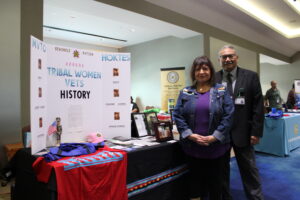
Among those at the resource fair were the Oklahoma Department of Veteran Affairs (ODVA), the Center for Women Veterans (CWV), and the Military Women’s Memorial. Representatives for homeless services, Missing and Murdered Indigenous People, D-Dent, a nonprofit that provides free dental services for veterans, and Oklahoma Legal Aid were also present.
Muscogee Nation Veterans Affairs Assistant Director Rachel Riddle explained that the event is an efficient way to bring services to veterans. According to Riddle, veterans may be apprehensive about reaching out for services or simply may not know they exist.
“Hosting events like these helps them know they can trust these vendors because we trust them enough to bring them to our women’s summit,” Riddle said. “They can reach out, get contact information, and make that connection.”
Culley said the topics addressed at the event were hand-picked by the women veterans in attendance. According to Culley, the event is a two-way form of communication; attendees listen to speakers, and then event coordinators listen to feedback on the speakers. This helps coordinators understand the unique needs of women veterans.
When discussing her transition from active duty to civilian life, Culley said she navigated it alone. Initially, she was unaware of the many services that were available specifically for veterans like herself. She was encouraged to file for disability and get connected at her local Veterans Affairs office. However, she explained, employees at the VA “spoke in a language I did not understand.” That language referred to the paperwork required to receive benefits.
Recognizing All Vets
Culley began her journey of giving back in 2005 when she began working for the Oklahoma City Veterans Affairs Healthcare System. In 2012, she was hired by the then newly-formed Office of Tribal Government Relations. There she worked closely with many Tribes and attended ceremonies honoring their veterans. However, she noticed a lack of visibility and recognition of Tribal women veterans. It was then that she said she began aggressively seeking out women veterans at these events to affirm to them that they are just as worthy of recognition for their service as the men.
“It was always for the men, I never saw the women,” Culley said. “I started talking to the women and would tell them, ‘This is for you too.’ The more I did that, the more I would hear them say, ‘I’m not a vet.’ Even if they went into combat, they didn’t consider themselves a vet. Culturally, for some of our Nations, women are not looked at as veterans. They don’t have a place in that picture.”
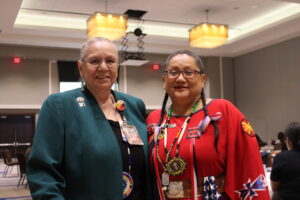
Kiowa Tribe Veterans Director LaRue Guoladdle (Kiowa) was one of the summit’s featured speakers. She is an army veteran who served from 1989-1996. She returned in 2015 before her retirement from the reserves. She was stationed in Germany during Operation Desert Shield and Operation Desert Storm. She is a proud member of the Kiowa Women Warriors color guard. At the summit, she wore a red Kiowa dress adorned with her army unit patches. Like other veterans Culley has encountered in the community, Guoladdle experienced inner self conflict stepping into a leadership role within her tribe.
“It’s unheard of to be in this position as a veteran because my tribe is a patriarchal tribe. It’s a big deal, I’ve been going at it for four years now trying to bring services to our veterans. I love it. I love making claims and talking to older veterans, particularly our Vietnam veterans we are losing at a higher rate.” LaRue said.
LaRue said smaller tribes in rural areas of the state are underserved. Some veterans she meets in the community do not always disclose their status, creating an issue in which she does not always know who she is serving as a Tribal VA director. According to Guoladdle, veterans do not always disclose their service records because they were raised to be self-reliant and to solve their problems themselves.
Some were reluctant to take Culley’s message to heart. For some women veterans, it meant wrestling with cultural social norms. Culley said the process to help women veterans recontextualize their place within their culture has been slow; it has opened channels of communication between women veterans and those who serve them. Establishing connections with the VA is particularly important in preventing suicides among Native American veterans. Culley said that suicide rates are higher among Indigenous veterans who do not utilize VA services.
Many specific federal programs are available for women veterans. To learn more about VA services for Native American women, visit womenshealth.va.gov. To stay up to date on MCN VA events and services, visit their Facebook page, Muscogee Nation Veterans Affairs.