This story is our sixth in a series by the Mvskoke News team focusing on climate solutions on the Mvskoke Reservation. This year, Mvskoke Media has been part of the Climate Beacon Newsroom Initiative, a collaboration between the Indigenous Journalists Association and the Solutions Journalism Network. Solutions journalism rigorously examines evidence-based individual, group, and community responses to social problems. The initiative supported our newsroom’s skills development in story production, specifically stories focused on responses to climate and environmental challenges.
MVSKOKE RESERVATION – Nestled in the heart of the Muscogee (Creek) Nation Reservation lies the Deep Fork Wildlife Refuge. It is home to a diverse array of wildlife and plant life, as well as human visitors who enjoy its beauty. Established in 1993, it contains one of the last remaining bottomland hardwood forests in Oklahoma. Found within the vast landscape are orphan wells, scars from a bygone era of oil drilling. Today, organizations like the Well Done Foundation are implementing solutions to plug them.
The area was used by local Tribes including the Wichita Nation, the Caddo Nation, and the Osage Nation, from the 1500s to the 1800s. Later, after Removal from the homelands in the 1830s, Creek survivors of the Trail of Tears settled in the area and established the capital city of Okmulgee. Creeks made good use of the land by hunting and trading on it. In the early 1900s, oil was discovered, attracting many businessmen to the area. After years of drilling, the oil wells eventually came up dry.
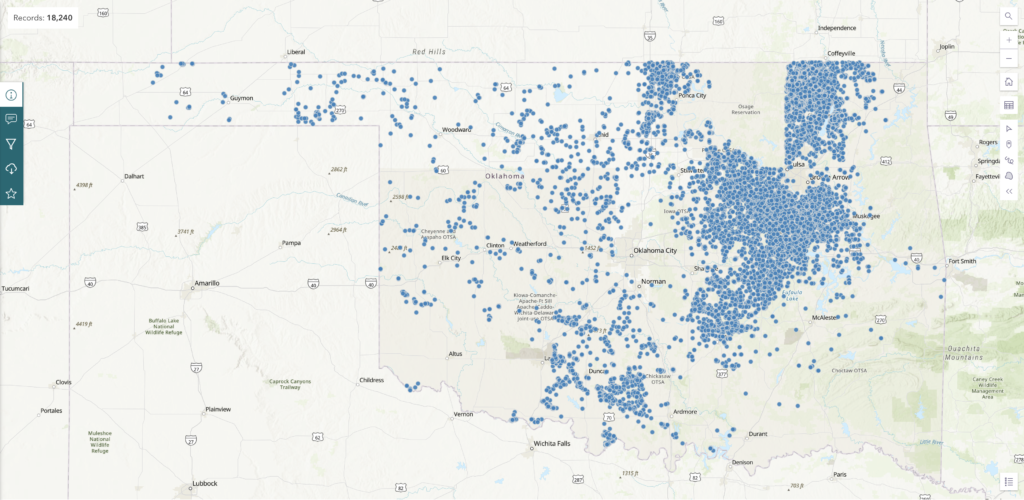
Orphan wells are abandoned oil and gas wells that are no longer owned or managed. After two years of inactivity, the wells are deemed abandoned. They cause significant environmental harm by leaking methane and CO2e. A dataset map published by the Oklahoma Corporation Commission in 2022 estimates there are 18,316 recorded orphan wells in the state.
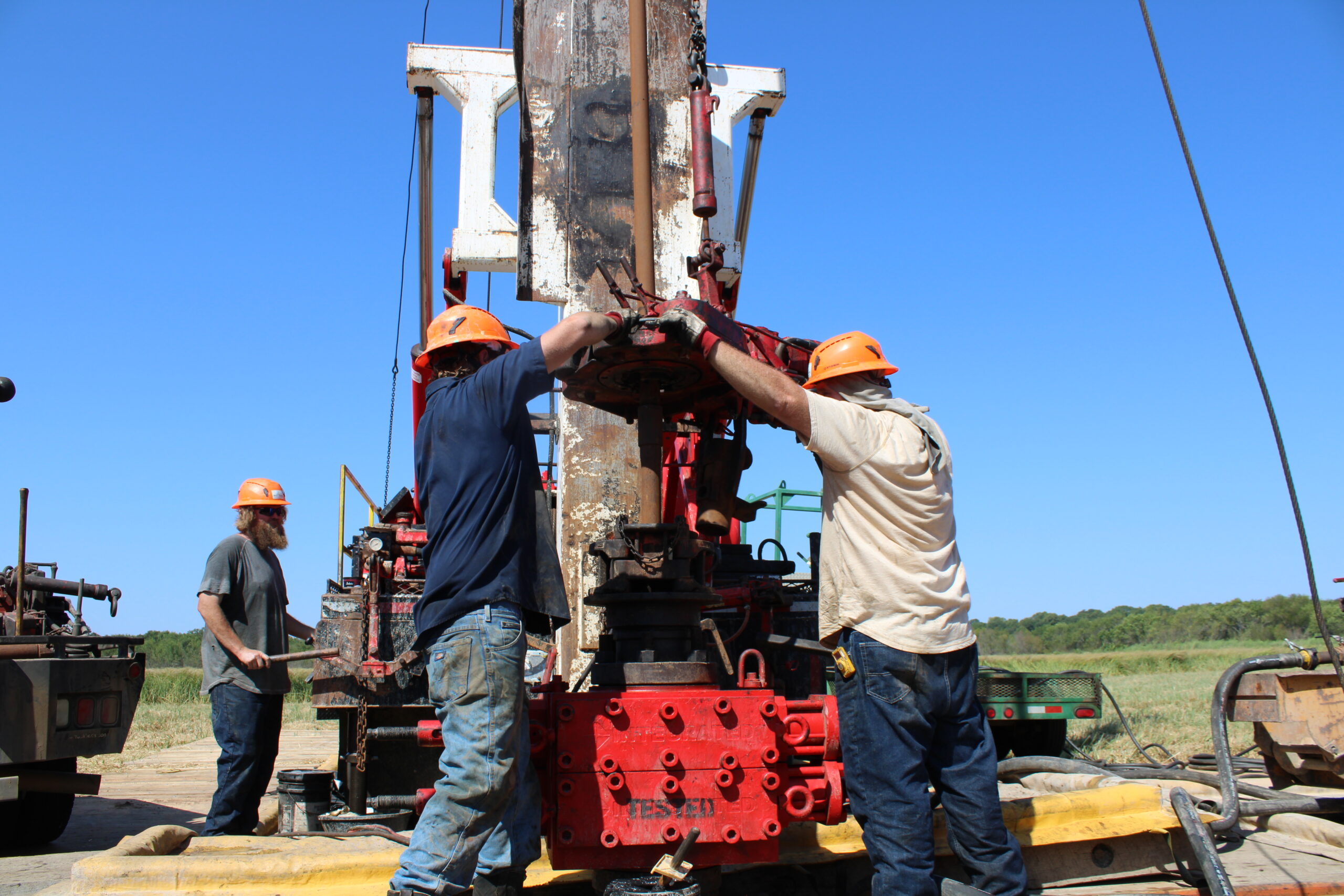
Today, in a drained wetland in the Deep Fork Wildlife Refuge, you will find Curtis Shuck and his crew plugging orphan wells left behind. Shuck is the Chairman of the Well Done Foundation, a Montana-based nonprofit whose mission is to plug orphan wells nationwide. So far, Well Done has plugged 37 orphan wells in the Deep Fork Wildlife Refuge. Shuck said there are still 69 more to go, and new orphan wells are still being discovered.
Oil well plugging is a process that permanently closes an oil well by using heavy machinery to pour cement from the bottom to the top.
Before founding Well Done, Shuck had worked in the oil and gas industry for over 30 years. It wasn’t until 2019 that Shuck came across his first orphan well during a consultation in Montana.
“I saw these orphan wells out in the middle of this beautiful wheat field. I just couldn’t believe my eyes,” Shuck said.
“There was all of this garbage left behind. Oil field trash, pump jacks, pipe, timbers, the wells were leaking methane and hydrogen sulfide. Not only could you see the mess, you could smell it.”
Shuck described his reaction as “embarrassing” as an industry professional. During that same day, the more orphan wells Shuck discovered on the property, the more he felt a pull to do something about it. During the four-hour drive home, he began taking the first steps to acquire domain names for the Well Done Foundation. He described his experience as a calling, though his feelings change from day to day.
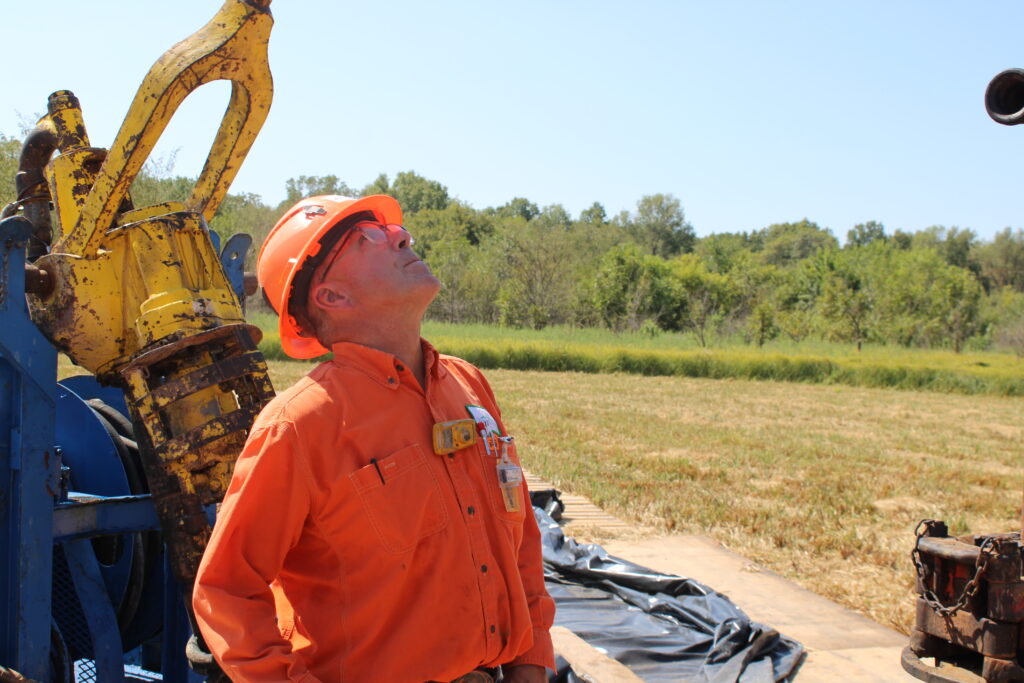
“It was during that day that the name came and this vision appeared,” Shuck said, “sometimes I call it a calling, other times, maybe it’s a curse, you know what I mean?”
“Kind of depends on the day. Today is more of a calling.”
Shuck believes that plugging orphan wells offers a solution to the environmental damage they cause and, by implementing it, can prevent further damage. Although the number of orphan wells in Okmulgee County can be overwhelming, each well plugged is a victory for Shuck.
“The reality is we need to do something, right? Doing nothing is not an option,” Shuck said. “Doing nothing means that you’re getting ready to have to respond to an emergency because eventually these wells will fail.”
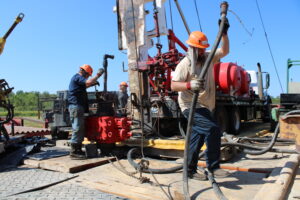
Since its conception in 2019, the nonprofit has plugged 127 wells across the country. Shuck routinely works with corporate sponsors and state agencies to take gas measurements from thousands of wells. He describes the effort as nonpartisan; the goal is to simply plug the wells. Plugging also creates economic opportunities for local contractors in the areas where the orphan wells are found. Shuck explained that businesses owned by Tribal citizens or that employ Tribal citizens are prioritized by Well Done for work.
When it comes to consulting with Tribes on well plugging, Shuck understands that it is important to know which reservation the orphan well is on. He said some Tribes are more hands-on with the well-plugging consultation process, while others are more hands-off.
Some Tribes, like the Blackfeet Nation, require a certain number of Tribal citizens to work on the project. They also require business licenses. Regardless, Shuck ensures the proper consultation processes are followed, including Section 107 Technical Requirements and Standards and Section 106 Tribal Consultations.
In 2023, the Muscogee Nation received nearly $1 million to access 166 wells. In 2024, the Biden Administration established the Federal Orphaned Well Program. A total of $4.7 billion was used to fund plugging and remediation efforts.
MCN Environmental Specialist II Trent Luellen believes that modern well plugging is a solution for the issue of orphan wells. He explained that most of the wells his department inspects are plugged, but they were not properly plugged. They can leak due to tectonic plates shifting in the ground. These wells are referred to as “legacy wells.” Luellen explained they may have been previously plugged; however, over time, they simply deteriorated.
“It did plug the well and keep any fluid migration from happening. With the ground moving, with tectonic plates, with earthquakes, sometimes stuff gets shaken, shaken loose, it can begin leaking again,” Luellen said. “Some of the things we’re running into is a well that has already been previously plugged but is now leaking. So we have to go back into that well and replug it, put bridge plugs in, and concrete it back to the top.”
Luellen’s department specifically scans and documents orphan wells on Tribal trust properties. So far, they have located 198 orphan wells on Tribal trust properties.
In a press release, U.S. Fish and Wildlife Service Refuge Manager Todd Gallion said that orphan well plugging is important to the Deep Fork Refuge’s future. When an uncapped well pollutes the environment, it affects everything. Gallion thinks plugging is an act of environmental reclamation.
“Orphan wells have been a persistent problem for the refuge. Their presence is holding us back from cleaning up old contaminant sites and returning habitats to their natural state,” Gallion said in a release.
“Capping these wells will benefit native species and improve hunting, fishing, and wildlife viewing for visitors to the refuge. Basically, addressing this problem means that we can reclaim the land for everyone’s benefit.”
Limitations
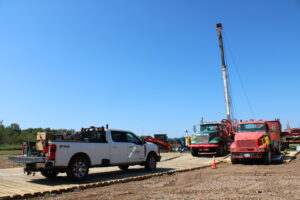
Well plugging presents its own challenges and limitations. Plugging a well can take up to two weeks, or 10 working business days. On average, it requires a crew of 10 workers. This includes a cementing crew, truck drivers, and a safety team. Because Shuck is a federal contractor, he doesn’t plug wells on weekends or federal holidays.
According to Shuck, an average orphan-well site requires at least 20 truckloads of equipment to set up before the plugging process can begin. Wooden crane mats must be placed on the ground so construction vehicles and equipment can easily reach the orphan well site.
Challenges to plugging include “burps,” when oil comes to the surface of the well. If the well is not connected to anything, oil leaks out. Wells can also leak hydrogen sulfide and methane. Sites need to be tested to determine whether they pose a danger.
Luellen explained that each site is different, especially if the well has already been plugged. Well depths can range from 1,200 ft to 5,000 ft. According to Luellen, each orphan well can cost anywhere from $25,000 to $125,000 to plug, and the process takes time.
“Sometimes you have to streamline all the way to the bottom of a well to see if there’s a plug there. Sometimes you have to drill out the plugs in order to back it up. You have to reinstall plugs, you have to do concrete to so many feet above the aqua tables, or water tables. It’s a lengthy process,” Luellen said.
For Gallion and the Deep Fork Wildlife Refuge staff, the work to clean up the environment continues. The hope is that if the wells are plugged properly, they will create a cleaner, safer future for those who pass through and enjoy the area’s beauty.
“We want to make sure that we care for and protect the watershed by removing any known and potential contaminant sources and restoring bottomland hardwood habitats, including wetlands,” Gallion said in a release. “These restored habitats can provide ecosystem service, like being water filters to the landscape, improving water quality for communities downstream. Addressing orphan wells is a vital part of that mission.”
According to Shuck, he has not yet encountered an orphan well in the Deep Fork Wildlife Refuge that has become an ecological disaster. However, he said that does not make his mission in the area any less urgent.
“Every one of them has the potential for being that disastrous,” Shuck said. “Given the proximity to the Deep Fork River, this critical habitat we’re around, those become even more important beyond just air and water. It’s also the critters that call this place home.”
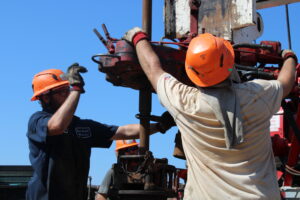
Orphan well plugging can be lengthy and costly to implement. It takes professionals with the knowledge to coordinate teams, raise money, and manage safety risks. Despite these limitations, Shuck, Luellen, and Gallion agree that the mission is important and is worth the results.
Well by well, areas on the Mvskoke Reservation, such as the Deep Fork Wildlife Refuge, are slowly becoming safer, healthier habitats for all species that live there.